

Cart
1

Table of Contents
- What Separates a Truly Durable Dog Bed From a Disposable One
- Chew-Proof Dog Beds for Heavy Chewers and Diggers
- Indestructible Dog Bed Materials: Ripstop, Ballistic Nylon, and Aluminum
- Orthopedic Dog Beds for Senior Dogs and Joint Health
- Dog Bed Size Guide: Match Bed Dimensions to Your Dog's Weight and Sleep Style
- Warranties, Return Policies, and Repairability: What to Check Before You Buy
- Budget-Friendly vs. Investment Beds: When Paying More Actually Saves Money
- Conclusion: How to Buy Durable Dog Beds Online With Confidence
- Frequently Asked Questions
Last Updated: October 5, 2026
What Separates a Truly Durable Dog Bed From a Disposable One
Most dog beds fail the same way: the cover tears, the fill flattens, or the zipper gives out within a year. When you buy durable dog beds online, you are paying for three things that cheap beds skip: a puncture-resistant shell, high-density foam that holds its shape, and reinforced stitching at every stress point.
The 5 Specs That Predict Longevity
Five specifications tell you more about lifespan than any marketing claim:
- Fabric denier: Look for 1,000D or higher. Thin covers fail first.
- Fill density: High-density foam and memory foam resist flattening; loose fiber does not.
- Stitching: Double-stitched seams at corners and zippers prevent blowouts.
A bed that lists these specs openly usually performs as advertised. A bed that lists none of them rarely does.
Chew-Proof Dog Beds for Heavy Chewers and Diggers
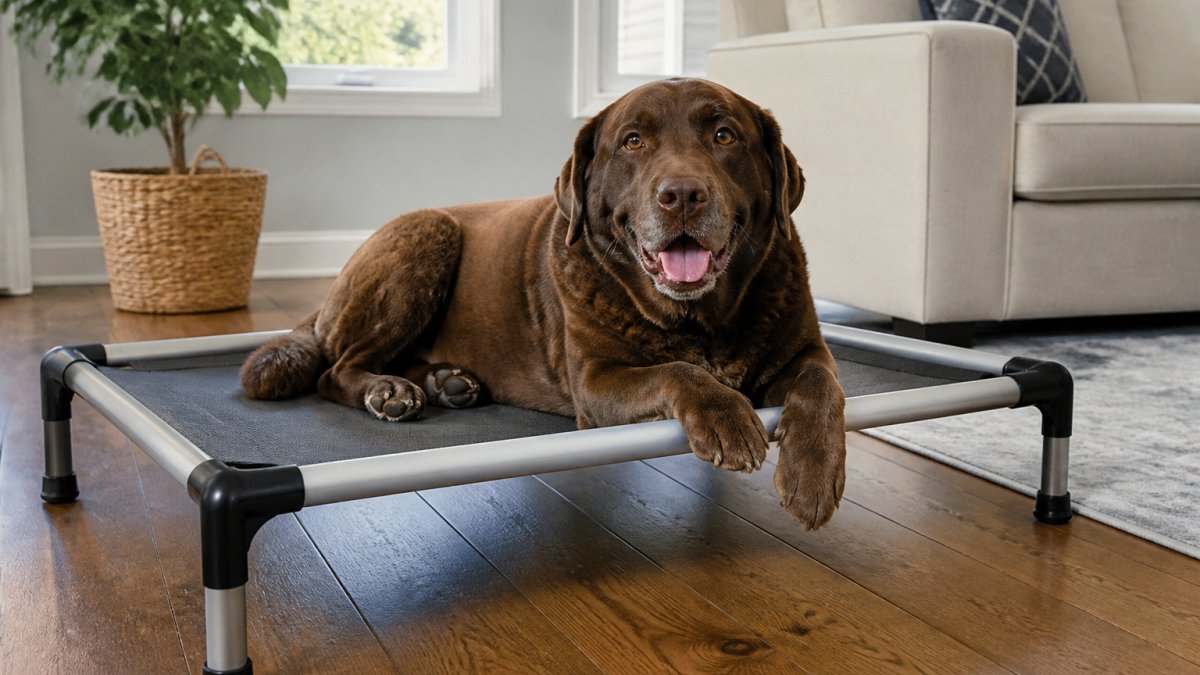
No fabric bed is truly indestructible, but the right construction gets close. Chew-proof dog beds pair ripstop or ballistic nylon with a rigid frame, so there is no loose fill to shred and no soft corner to dig into.
K9 Ballistics Chew Proof Elevated Bed: Best for Extreme Chewers
The K9 Ballistics Chew Proof Elevated Bed is the pick for dogs that have already destroyed multiple beds. Its aluminum frame and rip-stop fabric leave nothing soft to grab, and the elevated design keeps air moving underneath. The tradeoff: less cushioning than a foam bed, so it suits chewers better than seniors.
Sytopia Indestructible Dog Bed: Best for Scratching and Digging
| Bed | Starting Price | Frame | Best For |
|---|---|---|---|
| K9 Ballistics Elevated | $129 | Aluminum | Extreme chewers |
| Sytopia Indestructible | $89 | Fabric | Scratching and digging |
| Bedsure Chew Proof | $45 | Fabric | Moderate chewers |
Indestructible Dog Bed Materials: Ripstop, Ballistic Nylon, and Aluminum
Material choice is the single biggest predictor of whether a bed survives a year or a month. The three materials below dominate the durable category, but they fail in different ways and suit different dogs. Understanding the mechanism behind each one lets you match the material to your dog's specific destruction style.
Ripstop Nylon: Tear Containment
Ripstop is a woven nylon with a crosshatch grid of thicker reinforcement threads woven in at intervals. That grid is the whole point: when a tooth or claw starts a small tear, the reinforced threads stop it from propagating into a long rip. Standard nylon will unravel along a single pull; ripstop arrests the damage at the next grid line.
- Typical denier range: 200D to 1,000D. Anything under 400D is a cover, not a chew barrier.
- Best against: diggers, scratchers, and dogs that worry at seams rather than bite through.
- Weakness: a determined chewer can still puncture between grid lines. Ripstop slows damage; it does not stop a dog committed to destroying the bed.
Ballistic Nylon: Puncture Resistance
Ballistic nylon is a denser, tighter weave originally developed for military flak jackets. The tighter weave means more threads per square inch, which raises puncture resistance well above standard or ripstop nylon. It is heavier, stiffer, and more expensive per yard.
- Typical denier range: 840D to 1,680D. The 1,680D variants are the closest thing to a fabric chew barrier.
- Best against: dogs that bite and puncture rather than scratch.
- Weakness: stiffness. Ballistic nylon does not drape or feel soft, so it usually appears on elevated frames or as a cover over a separate cushion rather than as a plush bed surface.
Aluminum Frames: Removing the Soft Target
Aluminum frames solve the problem fabric cannot. A dog cannot tear through metal, so elevated beds built on aluminum tubing remove the soft, grabbable material a chewer targets. Aluminum is preferred over steel because it resists rust and weighs less, which matters if you move the bed between rooms.
- Best against: extreme chewers that have destroyed multiple fabric beds.
- Weakness: no cushioning. These beds suit chewers better than seniors or dogs with joint issues, and the fabric deck can still be chewed if it is not a tight, reinforced weave.
Chew-Proof vs. Chew-Resistant: Know the Difference
No fabric bed is truly chew-proof. "Chew-resistant" means the material delays damage; "chew-proof" in marketing usually means the bed survived a testing protocol, not that it is indestructible. The only genuinely chew-proof construction is a rigid frame with no loose fill and no soft corners to grab. If a listing claims "indestructible" but shows a plush fabric surface, treat the claim as chew-resistant at best.
Non-Toxic and Anti-Microbial Finishes
Look for non-toxic, anti-microbial finishes on any of these materials, especially if your dog has allergies or shares the bed with children. Common finishes include silver-ion treatments for odor control and PFAS-free water repellents. Avoid beds that list no finish information at all, an unlabeled finish is not the same as no finish.
Key Takeaway
Match the material to the failure mode: ripstop for diggers and scratchers, ballistic nylon for biters, aluminum frames for dogs that have already destroyed fabric beds. Denier below 400D is decoration, not durability.
Orthopedic Dog Beds for Senior Dogs and Joint Health
Orthopedic support matters most for senior dogs, large breeds, and dogs with arthritis. A true orthopedic bed uses layered memory foam or high-density foam thick enough to keep joints off the floor, which delivers pressure relief and supports canine mobility. Thin "orthopedic" beds with a foam label and no density rating rarely help.
Big Barker Orthopedic Dog Bed: Best for Large Breeds
The Big Barker Orthopedic Dog Bed is engineered for large and giant breeds, with calibrated orthopedic foam layers and a 10-year "won't flatten" warranty. That warranty is the strongest signal in this category. The drawback is size: it takes up serious floor space.

Casper Dog Bed: Best Memory Foam for Medium Dogs
The Casper Dog Bed brings pressure-relieving memory foam and a tear-resistant nylon cover to medium dogs. The cover is machine-washable, which matters for older dogs. It costs more than standard beds, but the foam quality justifies it for joint support.
Dog Bed Size Guide: Match Bed Dimensions to Your Dog's Weight and Sleep Style
Measure your dog nose to tail while stretched out, then add 8 to 12 inches. That number is your minimum bed length. A dog that curls into a tight ball can use a smaller bed, but a sprawler needs the full measurement or they will hang off the edge.
| Weight | Minimum Bed Size | Sleep Style |
|---|---|---|
| Under 25 lb | 24 x 18 in | Curler or nester |
| 25-60 lb | 36 x 27 in | Curler or sprawler |
| 60-100 lb | 44 x 32 in | Sprawler |
| Over 100 lb | 52 x 36 in | Sprawler |
Weight capacity matters as much as dimensions. A bed rated for 50 pounds will flatten under a 90-pound dog within months, no matter how good the fabric is.
Warranties, Return Policies, and Repairability: What to Check Before You Buy
Warranty coverage separates beds built to last from beds built to sell. Before you buy durable dog beds online, read the warranty language line by line, because the difference between a real guarantee and a marketing one comes down to three words: what is excluded.
Reading a Warranty Like a Skeptic
Three things determine whether a warranty is worth anything:
- Length and scope. A "won't flatten" warranty on the foam is worth more than a general one-year warranty that excludes normal wear. Flattening is the most common failure mode, so a warranty that specifically covers it is the strongest signal in the category.
- Exclusions. Most warranties void coverage for chewing, digging, and "damage caused by the pet." If your dog is the reason you are buying a durable bed, a warranty that excludes pet damage covers almost nothing.
- Claim process. A warranty that requires you to ship the bed back at your own cost is often not worth pursuing. Look for brands that ask for photos instead of a return.
Return Windows and Restocking Fees
Return policies matter more than warranties for the first 30 days, because fit and firmness are hard to judge from a product page. A common pattern is a 30-day return window with free return shipping on defective items but a restocking fee on "changed my mind" returns. Check two things before you order: the return window length and whether return shipping is on you.
Repairability: The Spec Almost No One Checks
Repairability is the spec almost no one checks, and it is where durable beds earn their price over years rather than months. Beds with replaceable covers and heavy-duty zippers let you swap the shell instead of replacing the whole bed, which stretches your money further over the bed's life.
How to Repair Minor Tears Before They Spread
A small tear does not mean a new bed. For ripstop and ballistic nylon, a peel-and-stick nylon repair patch applied to the inside of the cover stops a tear from propagating along the weave. For larger punctures, a curved needle and heavy-duty nylon thread in a baseball stitch closes the opening without adding bulk that a dog will worry at.
Pro Tip
Ask whether replacement covers are sold separately before you buy. A bed with a $30 replacement cover can outlast two disposable beds, even if the upfront price is higher. Keep the patch kit with the bed so repairs happen the day a tear appears, not the week it becomes a hole.
Watch Out
Do not machine-dry a repaired cover. Heat shrinks the patch adhesive and can pull the repair open. Air-dry flat instead.
Budget-Friendly vs. Investment Beds: When Paying More Actually Saves Money
A budget bed replaced twice a year can cost more than an investment bed that lasts for years. That math is the whole argument for buying up. Budget beds make sense for moderate chewers and puppies still growing into their adult size. Investment beds make sense once your dog is full-grown and has a track record of destruction.
Watch Out
Buying a premium bed for a puppy is a common mistake. Puppies chew, grow, and outgrow their bed within a year. Buy budget until your dog reaches adult size and weight.
Conclusion: How to Buy Durable Dog Beds Online With Confidence
The right bed comes down to matching materials and specs to your dog's habits, not to the biggest marketing claim. Check denier, fill density, stitching, and warranty before you add anything to your cart.
At Paws ND Whiskers, we stock premium essentials built for comfort and care, including cozy beds, engaging toys, and grooming tools designed to support your pet's health.
Frequently Asked Questions
Which dog bed is the most durable for aggressive chewers?
Elevated beds with aluminum frames and ripstop fabric hold up best against aggressive chewers. For dogs that scratch or dig rather than bite through, high-density fabric with reinforced corners can be a good option. No fabric bed survives every dog, but certain constructions come closest.
What materials make a dog bed truly chew-proof?
The strongest options combine ripstop fabric, ballistic nylon, reinforced stitching, and metal (usually aluminum) frames. Ripstop fabric stops tears from spreading because of its crosshatch weave. Ballistic nylon resists punctures. A heavy-duty zipper and reinforced seams prevent the cover from splitting at stress points. Fabric-only beds labeled chew-proof are usually chew-resistant, not chew-proof, and work best for moderate chewers.
How do I choose the right size durable bed for my dog?
Measure your dog from nose to tail and add 8 to 12 inches for curl-up sleepers or 12 to 15 inches for sprawlers. Check the bed's size dimensions and weight capacity before buying. A 70-pound Labrador needs a bed at least 36 inches long. If your dog is still growing, size up. Beds that are too small cause joint strain and get chewed at the edges out of frustration.
Do chew-proof dog beds come with a warranty?
Some do. Chew damage is usually excluded from warranties because no fabric is truly indestructible. Before buying, read the warranty coverage details and the return window. A 30-day return policy matters if your dog rejects the bed.
Are orthopedic dog beds more durable than standard beds?
Yes, in most cases. Orthopedic beds use high-density foam or memory foam that holds its shape for years, while standard beds use loose fiber fill that clumps and flattens within months. Orthopedic beds also cost more, so they make sense for senior dogs, large breeds, and dogs with arthritis.

