

Cart
1
Table of Contents
- When Does a Dog Actually Need a Warm Coat?
- Signs Your Dog Is Too Cold in Winter Weather
- How to Measure a Dog for a Winter Coat
- Key Features That Keep Dogs Warm: Insulation, Windproofing, and Fit
- Waterproof Dog Jackets for Snow: What to Look For
- Breed-Specific Sizing and Senior Dog Mobility Considerations
- Eco-Friendly Materials and Durability: What Matters Most
- Frequently Asked Questions
Last Updated: September 27, 2026
When Does a Dog Actually Need a Warm Coat?
Most people bundle up their dog too early or not at all. The truth is that warm dog coats for cold climates become necessary around the freezing mark for small, thin-coated, or senior dogs, while thick-coated breeds often handle much lower temperatures without help.
Temperature Thresholds by Breed and Size
Most articles give you one vague number. A better approach is to match the threshold to the dog's body type, coat type, and age. The chart below is a decision tool, not a rule, use it to decide when to reach for a coat, when to shorten the walk, and when to stay inside.
| Temperature | Small / thin-coated / senior | Medium, single-coated | Double-coated / cold-adapted |
|---|---|---|---|
| Above 45°F | No coat needed | No coat needed | No coat needed |
| 32-45°F | Light fleece or windbreaker | Optional for short walks | No coat needed |
| 20-32°F | Insulated coat required | Light to mid-weight coat | Optional; watch for wet snow |
| 10-20°F | Insulated coat + belly coverage; short walks only | Insulated coat required | Light coat for long outings |
| Below 10°F | Potty breaks only; coat plus paw protection | Insulated coat; limit time outside | Coat recommended for extended time |
A few mechanics behind those bands:
- Surface-area-to-volume ratio. Small dogs have more skin per pound of body mass, so they radiate heat faster. That is why a chihuahua hits its limit near 40°F while a husky is still comfortable at 10°F.
- Coat type. A double coat traps a layer of warm air against the skin and sheds water. A single coat, common in poodles, greyhounds, and most terriers, has no such buffer.
- Body fat and muscle. Lean, athletic dogs chill faster than dogs carrying extra insulation. Very young and very old dogs regulate temperature less efficiently than adults in their prime.
- Wind and moisture. A 25°F dry day is far easier on a dog than a 35°F day with wet snow and 20 mph wind. Wind strips the warm boundary layer around the body; wet fur loses most of its insulating value.
How to Read Your Dog, Not Just the Thermometer
The chart is a starting point. The real signal is your dog. A dog that is comfortable will walk normally, keep its tail relaxed, and show no hesitation. A dog that is cold will tell you within a few minutes. Pair the temperature bands above with the behavioral signs in the next section, and you will rarely guess wrong.
Signs Your Dog Is Too Cold in Winter Weather
The clearest signs your dog is too cold include shivering, lifting paws off the ground, tucking the tail, whining, and refusing to walk. These signals mean it's time to head inside or add a layer.
Watch for these specific behaviors:
- Shivering or trembling that doesn't stop
- Lifting one or more paws off the cold ground
- Curling into a ball or tucking the tail between the legs
- Slowing down, stopping, or refusing to move
- Whining, barking, or looking back toward home
Watch Out
Never leave a dog outside unattended in freezing temperatures, even with a coat on. A coat slows heat loss, but it doesn't make a dog cold-proof, and frostbite can set in on ears, tails, and paws faster than most owners expect.
How to Measure a Dog for a Winter Coat
To measure a dog for a winter coat, you need three numbers: girth, length, and neck. Use a soft tape measure and take each one while your dog stands still, ideally right after some exercise when they're relaxed.
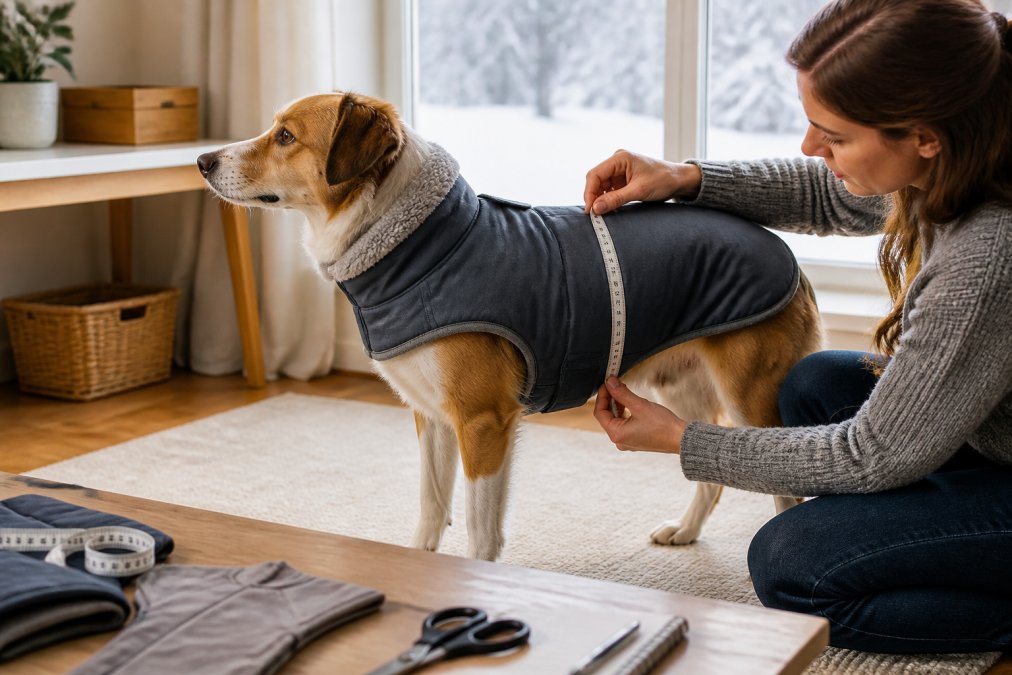
Girth, Length, and Neck Measurements
Here's how to take each measurement accurately:
- Girth: Wrap the tape around the widest part of the ribcage, just behind the front legs. This is the most important number for fit.
- Length: Measure from the base of the neck to the base of the tail, following the curve of the spine.
- Neck: Measure around the neck where the collar sits, leaving room for two fingers.
Write all three numbers down in inches and compare them to the brand's sizing chart. If your dog falls between sizes, size up for breeds with thick coats and size down for lean, short-haired dogs.
Key Features That Keep Dogs Warm: Insulation, Windproofing, and Fit
The features that keep a dog warm are thermal insulation, windproofing, and a fit that covers the belly without restricting movement. A coat can have the best materials in the world and still fail if it doesn't fit properly.
Look for these elements:
- Thermal insulation: Fleece lining or synthetic down traps body heat close to the skin.
- Windproof outer shell: Blocks cold air from cutting through the coat.
- Water-repellent or waterproof finish: Sheds snow and light rain.
- Adjustable straps: Customize the fit around the chest and neck.
- Belly coverage: Protects the underbelly, where dogs lose heat fastest.
Waterproof vs. Water-Resistant Materials
Waterproof materials block moisture completely, while water-resistant materials repel light snow and rain but eventually soak through. For snowy climates, waterproof wins.
Layering Systems for Extreme Cold
For sub-zero temperatures, a layering system works better than a single heavy coat. Start with a moisture-wicking base layer, add a fleece mid-layer, and finish with a windproof, waterproof shell.
Pro Tip
If your dog wears a harness, look for coats with a leash attachment opening or harness access slot. It saves you from wrestling a coat over a harness every single walk.
Waterproof Dog Jackets for Snow: What to Look For
A good snow jacket for dogs combines waterproof fabric, a warm lining, and full-body coverage that stays in place during activity. Skip anything that only covers the back.
Check these boxes before buying:
- Sealed seams and a coated outer shell
- Fleece or synthetic down lining
- Coverage from neck to tail, plus the belly
- Quick-release buckles for fast on and off
- Reflective piping for visibility on dark walks
- Machine washable fabric for easy cleanup
Breed-Specific Sizing and Senior Dog Mobility Considerations
Breed shape changes everything about coat fit. Dachshunds need long, low-cut coats. Greyhounds need deep-chested designs. Pugs and bulldogs need wider neck openings to fit over broad heads.
Matching Coat Cut to Body Shape
Use these pairings as a starting point when you compare a coat's sizing chart to your dog's measurements:
- Long-backed, short-legged (dachshund, corgi, basset hound): Look for extended-length coats or brands that publish a separate "long" size. Standard coats will ride up over the hips and leave the lower back exposed.
- Deep-chested, narrow-waisted (greyhound, whippet, saluki): Standard girth sizing will be too loose at the waist. Look for coats with a second adjustment strap behind the ribcage, or a sighthound-specific cut.
- Broad-chested, short-necked (bulldog, pug, Boston terrier): Neck openings must be wide enough to clear the head without forcing. Step-in designs are usually easier than pullover styles.
- Thick double coat (husky, malamute, chow): Size to the outer coat, not the skin. A coat that fits snugly on a shaved or summer-coated dog will bind when the winter coat is full.
- Lean, short-haired (boxer, pointer, vizsla): These dogs have little natural insulation and often need belly coverage that standard coats skimp on.
Senior Dog Mobility: The Angle Most Guides Skip
Senior dogs bring an extra layer of complexity that most coat guides ignore. Arthritis and reduced circulation make cold weather harder on older joints, and stiff hips or a sore back turn a simple step-in coat into a daily struggle. A warm coat helps, but only if the dog will actually wear it.
- Flat-open, top-fastening designs. A coat that lies flat on the floor and fastens across the back lets you dress a dog without lifting legs or rolling the body. This is the single biggest quality-of-life upgrade for arthritic dogs.
- Magnetic or quick-release buckles. These are easier on hands with reduced grip strength and faster on a dog that will not stand still.
- Lightweight insulation. Heavy coats add weight that tired joints have to carry. A mid-weight insulated coat with a windproof shell often outperforms a bulky parka for a senior dog on a short walk.
- Soft, non-irritating lining. Senior coats thin out, and rough seams or stiff fabric can cause rubbing sores on the elbows and chest.
- Harness compatibility. Many senior dogs wear a support or no-pull harness for walks. Look for a coat with a leash opening or a harness slot so you are not layering hardware over hardware.
- Orthopedic harness integration. If your dog uses a mobility harness with a rear lift strap, choose a coat that leaves the rear strap accessible. A coat that covers the lift point defeats the purpose of the harness.
Pro Tip
For senior dogs, buy the coat that is easiest to put on, not the one with the highest warmth rating. A mid-weight coat that goes on in ten seconds beats a heavy parka that takes two people and a treat to wrestle on.
Eco-Friendly Materials and Durability: What Matters Most
Eco-friendly dog coats use recycled polyester, organic cotton, or plant-based fill instead of virgin synthetics. Durability matters just as much, since a coat that lasts five winters beats three cheap ones that fall apart.
Frequently Asked Questions
What temperature is too cold for a dog in winter?
Most dogs are comfortable until temperatures drop below 45°F. Small breeds, short-haired dogs, and seniors may feel cold below 50°F. At 32°F and below, all dogs are at risk of hypothermia during prolonged exposure. Watch for shivering, lifting paws, or reluctance to walk. If your dog shows these signs, bring them inside immediately. Warm dog coats for cold climates extend outdoor time safely when temperatures hover near freezing, but no coat replaces supervision in extreme cold.
Do coats actually keep dogs warm?
Yes, when they fit correctly and use appropriate insulation. A well-fitted coat traps body heat and blocks wind, similar to how a jacket works for humans. Dogs with thin coats, seniors, and small breeds benefit most. Look for fleece lining, synthetic down, or thermal insulation. Waterproof dog jackets for snow add a weatherproof layer that prevents moisture from stealing warmth. Without a coat, a Chihuahua in 20°F weather can lose body heat rapidly.
How do I know if my dog needs a winter coat?
Your dog likely needs a coat if they shiver, tuck their tail, or refuse to walk in cold weather. Breeds with single coats, short fur, or low body fat (like Greyhounds, Boxers, or Chihuahuas) feel cold faster. Senior dogs with arthritis also benefit because cold worsens joint pain. If your dog has a thick double coat (like a Husky or Malamute), they may only need a coat in sub-zero temperatures or wet snow. Signs your dog is too cold include whining, lifting paws, and slowing down.
What features should I look for in a heavy-duty dog winter coat?
Prioritize adjustable straps at the chest and belly for a secure fit, reflective piping for visibility on dark walks, and a leash attachment point. Waterproof or water-repellent outer fabric with taped seams keeps snow and rain out. Fleece-lined interiors add warmth without bulk. Quick-release buckles make dressing easier for senior dogs or anxious pups. Harness access slots let you use a no-pull harness underneath. Machine washable materials simplify cleaning after muddy walks.
Picking the right warm dog coat for cold climates comes down to fit, insulation, and your dog's individual needs. At Paws ND Whiskers, we carry premium pet essentials designed to keep dogs comfortable through the harshest winters, from cozy bedding to durable apparel built for daily wear. Our focus on high-quality, reliable products means you can trust that what you add to your cart will hold up season after season. Explore our collection and find the right fit for your dog today.

