

Cart
1
Last Updated: October 23, 2026
Quick Summary
Premium pet essentials for new puppies cost more up front because they use stronger materials, better construction, and safer finishes than budget alternatives, so they survive your puppy's first year of chewing, accidents, and growth spurts. Buy the eight core categories first, then add grooming tools and apparel once your puppy settles in.
- A new puppy checklist has eight core categories, and everything else is optional.
- Size the crate for your puppy's expected adult weight, not current size.
- A collar should pass the two-finger test and have at least 2 inches of adjustment range.
- Re-measure a puppy's harness every two to three weeks until growth slows.
- Rotate three toys rather than offering ten at once to keep a puppy engaged.
Table of Contents
- Why Premium Puppy Essentials Are Worth the Extra Cost
- Your New Puppy Checklist: The 8 Essentials You Actually Need
- Food, Bowls, and Feeding Setup
- Finding the Best Bed for a New Puppy
- Collar, ID Tag, Leash, and Harness
- Puppy Toys for Teething: What to Buy and What to Skip
- How to Measure a Dog for a Coat and Warm Bedding
- Grooming, Potty Training, and Safety Standards
- Frequently Asked Questions
Why Premium Puppy Essentials Are Worth the Extra Cost
Premium pet essentials for new puppies cost more up front because they use stronger materials, better construction, and safer finishes than budget alternatives.
Here's the part most guides get wrong. Premium doesn't mean expensive for its own sake. A $29.10 plush nest bed that holds its shape through two wash cycles beats three $12 beds that don't.

Below, we break down exactly what to buy, what to skip, and how to measure before you order. The American Pet Products Association industry data confirms owners are spending more on quality, and for good reason.
Your New Puppy Checklist: The 8 Essentials You Actually Need
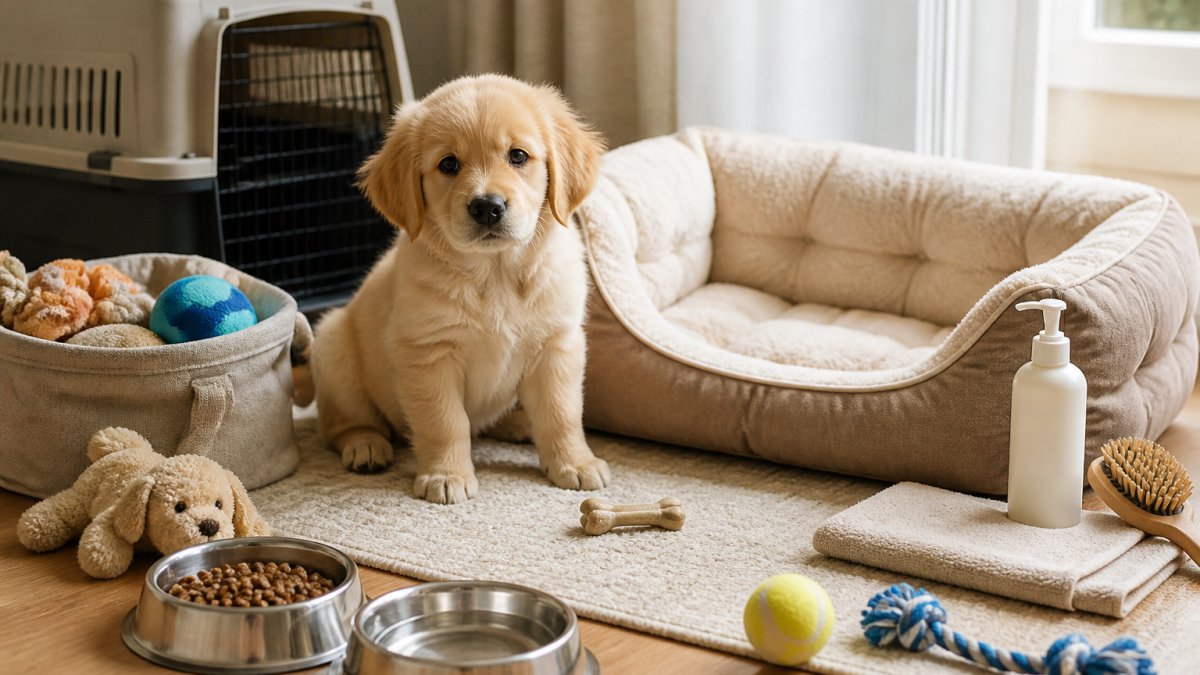
A new puppy checklist has eight core categories: food and bowls, a crate, bedding, a collar and ID tag, a leash and harness, chew toys, training treats, and potty supplies. Everything else is optional. Buy these first, then add grooming tools and apparel once your puppy settles in.
| Essential | What to Prioritize | When to Buy |
|---|---|---|
| Food and bowls | Life-stage formula, non-slip bowl | Before pickup |
| Crate and bedding | Right size for adult weight | Week one |
| Collar and ID tag | Lightweight, secure fit | Day one |
| Leash and harness | Adjustable, padded | Day one |
| Chew toys | Rubber, size-appropriate | Week one |
| Training treats | Small, soft, high-value | Week one |
| Potty supplies | Pads or outdoor schedule | Day one |
| Grooming tools | Brush matched to coat | Week two |
Food, Bowls, and Feeding Setup
Choosing High-Quality Puppy Food
High-quality puppy food lists a named meat source first, states an AAFCO life-stage statement, and matches kibble size to your puppy's breed. Large-breed puppies need controlled calcium and phosphorus ratios, so follow the label rather than free-feeding. Your veterinarian is the right person to confirm portions for fast-growing breeds.
Food and Water Bowls That Stay Put
A tipped bowl means a soaked floor and a hungry puppy. Look for weighted bases or elevated stands. Our Adjustable Height Pet Food Bowl Stand Rack uses a stainless steel frame with two bowls and adjusts between 12.5cm and 22.5cm, so it grows with your dog instead of being outgrown in a season. Stainless steel resists chewing and cleans easily.

Pro Tip
Place the bowl stand on a towel or mat for the first two weeks. Puppies spill while they learn coordination, and the mat saves your flooring.
Finding the Best Bed for a New Puppy
The best bed for a new puppy is one that supports joints during rapid growth, survives machine washing, and fits inside the crate if you're crate training.
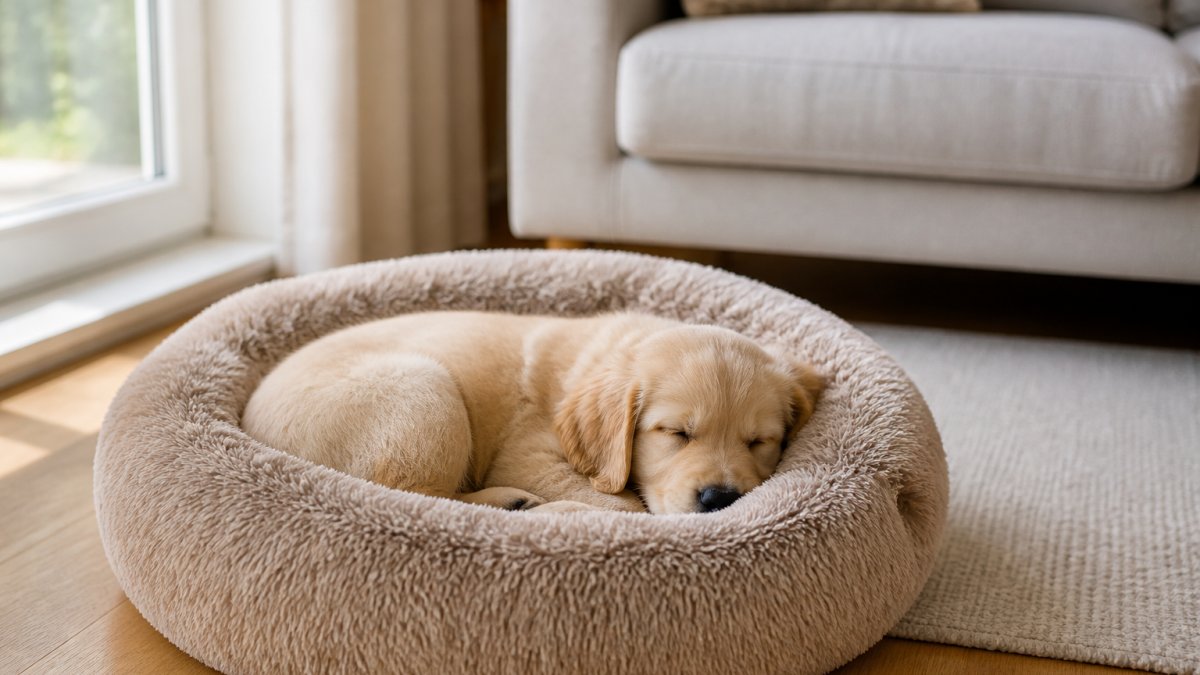
Our Pet Soft Comfortable Cozy Nest Bed is a printed plush sofa-style nest at $29.10, and it's the first bed we'd hand a new owner. It's soft enough for a nervous first night and structured enough to hold shape.
Crates, Bedding, and the First Night
Size the crate for your puppy's expected adult weight, not current size, and use a divider panel to shrink the space while they're small. Add a blanket that smells like home. The first night is rarely silent; a covered crate and a warm bed reduce whining more than anything else.
Watch Out
Never leave a puppy in a crate with a loose blanket or soft toy overnight until you know they won't shred and swallow fabric. Check the bed seams weekly for the first month.
Collar, ID Tag, Leash, and Harness
A collar and ID tag are non-negotiable from day one, and a harness is safer than a collar for a puppy still learning leash manners. Collars can strain a growing trachea when a puppy pulls. Harnesses spread pressure across the chest instead.
Collar Fit and ID That Survives Puppyhood
A puppy collar should sit high on the neck, just behind the ears, and pass the two-finger test: you should be able to slide two fingers under the strap without forcing. Anything looser slips over the head; anything tighter rubs. Measure neck circumference with a soft tape, then choose a collar with at least 2 inches of adjustment range so it fits through the next growth spurt.
For ID, a flat stamped metal tag on a split ring is the baseline. Engraved stainless steel or brass outlasts printed tags that fade. Include your phone number, not your address, and consider a second tag with a microchip registry number.
Harness Sizing for a Growing Puppy
Measure girth at the widest part of the chest, just behind the front legs, and add two fingers of room. A harness should allow full shoulder movement without rubbing the armpits. Look for adjustable straps at the chest and neck, padded contact points, and a back D-ring for a standard leash.
Re-measure every two to three weeks until growth slows. A common pattern is that a harness bought at 10 weeks fits until roughly 16 weeks, then needs a size up. Buying one harness with a wide adjustment range is usually cheaper than replacing a fixed-size harness twice.
Vocal Pet Chew Toy Durable Rubber Teething Bite Resistant →
Our adjustable nylon harness and leash set comes in three sizes with neck ranges from 28cm to 64cm and four colorways, priced at $22.85.
Pro Tip
Keep the leash short and loose during early walks. A taut leash teaches a puppy to pull; a loose leash with frequent treats teaches the opposite.
Watch Out
Never attach a leash to a collar for a puppy that pulls hard. Use a harness for walks and reserve the collar for ID.
Puppy Toys for Teething: What to Buy and What to Skip
Puppy toys for teething should be rubber or firm fabric, sized larger than your puppy's throat, and free of small parts that detach. Skip rope toys with loose strands, plush toys with plastic squeakers, and anything your puppy can shred in minutes.
Our Vocal Pet Chew Toy is molded natural rubber at $15.40, built for bite resistance and gentle teeth cleaning. It's the toy we recommend for the peak chewing months.

Key Takeaway
Rotate three toys rather than offering ten at once. Novelty keeps a puppy engaged, and rotation makes cheap toys last longer.
How to Measure a Dog for a Coat and Warm Bedding
To measure a dog for a coat, run a soft tape from the base of the neck to the tail base for back length, then measure the widest part of the chest for girth. Add a finger's width of room. Puppies in cold climates need a coat that covers the belly, not just the back.
For bedding, measure the space your dog actually sleeps in, not the dog standing up. A curled sleeper needs a bed roughly 1.5 times their curled diameter. Re-measure monthly until growth slows.
Grooming, Potty Training, and Safety Standards
Grooming starts early so your puppy accepts handling. A soft brush matched to coat type removes loose hair and prevents matting. Our Pet Grooming Brush uses flexible TPE bristles at $17.03, gentle enough for a first grooming session.
Potty training works on a schedule, not punishment. Take your puppy out every two hours, after meals, and after naps. Crate training and potty training reinforce each other when the crate is sized correctly.
Safety Standards, Materials, and Recalls
Safety standards matter more than most buyers realize. The Consumer Product Safety Commission recall database tracks pet product recalls, and checking it before buying a crate or chew toy takes two minutes. The FDA guidance on pet food and treats explains labeling requirements so you can read a bag with confidence. For training methods, the American Veterinary Medical Association on humane training is a reliable starting point.
Beyond recalls, check materials. Stainless steel bowls and natural rubber toys are easier to clean and harder to destroy.
Fit checks prevent most injuries.
Watch Out
Inspect chew toys weekly for cracks, missing pieces, and loose squeakers. Discard anything a puppy can tear apart.
Key Takeaway
Before you buy any premium essential, read the material list. A higher price does not guarantee safety; a fit check does.
Frequently Asked Questions
What do I need to welcome a new puppy home?
Start with eight core puppy essentials: high-quality puppy food, food and water bowls, a crate and cozy bedding, a collar with an ID tag, a leash and harness, chew and teething toys, training treats, and potty-training supplies. Add grooming tools and a puppy-safe shampoo. Set up a quiet sleeping area before your puppy arrives, and book a veterinarian visit within the first week. Premium versions of these items cost more up front but tend to last longer and hold up to chewing, which saves money over the puppy's first year.
What is the 7-7-7 rule for puppies?
The 7-7-7 rule describes a common adjustment timeline after adoption. The first 7 days are for decompression, when a puppy needs calm, quiet space and minimal handling. The next 7 weeks are for settling in and building routine, including house training and short training sessions. The final 7 months are about building trust and expanding experiences. Treat it as a general guide, not a strict schedule. Puppies vary widely, and a new puppy checklist should account for slower or faster adjustment.
What kind of bed is best for a new puppy?
The best bed for a new puppy is one that is soft, washable, and sized so the puppy can stretch out but still feel secure. A cozy nest or sofa-style bed with plush material works well for young puppies that like to curl. Avoid beds with loose stuffing your puppy can chew out, and check seams hold up to digging. Place the bed inside or next to the crate during crate training so the puppy associates it with rest. Buy for the puppy's adult size or plan to size up within a few months.
Which puppy toys for teething are safe and useful?
Safe puppy toys for teething are made from durable, non-toxic materials with no small parts that can break off. Natural rubber chew toys resist biting and help with teeth grinding and cleaning. Avoid hard plastic, cooked bones, and anything small enough to swallow. Rotate three to four toys so your puppy stays interested, and inspect them weekly for cracks. A durable rubber chew toy in a size suited to your puppy's mouth is a solid starting point, and it usually outlasts softer plush toys by months.
How do I choose the right coat or clothing size for my puppy?
Measure your puppy before buying any coat. Use a soft tape to record neck circumference, chest girth at the widest point behind the front legs, and back length from the base of the neck to the tail. Compare those numbers to the size chart rather than guessing by breed or age. Puppies grow fast, so check the fit every few weeks. A coat should allow full movement and cover the chest and belly without restricting the shoulders. For bedding, size up slightly so there is room to grow.
Where should a puppy sleep the first night?
A puppy should sleep in a crate or bed placed in or near your bedroom for the first few nights. Being close to you reduces whining and helps with bonding. Line the crate with comfortable bedding and keep the room quiet and warm. Expect one or two potty breaks during the night for a young puppy. Keep the setup consistent for the first week so the puppy learns that the crate is a safe place to settle, and avoid moving the bed around during that adjustment period.
Bringing a puppy home is exciting and a little overwhelming, and the right gear removes half the stress. At Paws ND Whiskers, we've built our catalog around premium essentials that hold up through the chewing, growing, and learning phase: cozy nest beds, durable rubber chew toys, adjustable harnesses, and grooming tools made to last. Add to Cart and give your new puppy a comfortable, safe start.


