

Cart
0

Table of Contents
- Why Safe Puppy Toys Matter More Than You Think
- Puppy Toy Size Guide: Match Toys to Your Puppy's Mouth and Jaw
- Safe Chew Toys for Puppies: Materials, Durability, and Chewing Strength
- Best Toys for 8-Week-Old Puppies: Starting Safe from Day One
- Choking and Swallowing Hazards: What Every Puppy Owner Should Know
- How to Inspect Dog Toys for Damage: A Practical Checklist
- Safe Use of Food-Stuffable and Puzzle Toys
- Frequently Asked Questions
Last Updated: October 18, 2026
Why Safe Puppy Toys Matter More Than You Think
A puppy's mouth is a testing ground. Everything goes in it, and the stakes are higher than most new owners realize.
Puppies explore the world by chewing. The ASPCA's pet care guidance makes the point plainly: supervision and size-appropriate toys prevent most toy-related injuries.
So here's the throughline for this guide. **Toy safety is not a product feature you buy.
Key Takeaway
The safest toy is the one that fits your puppy's mouth today, not the one that fits the puppy you'll have in six months.
Puppy Toy Size Guide: Match Toys to Your Puppy's Mouth and Jaw
A toy should be big enough that your puppy cannot fit it fully behind the front teeth. That's the whole rule, and it's the one most owners skip.
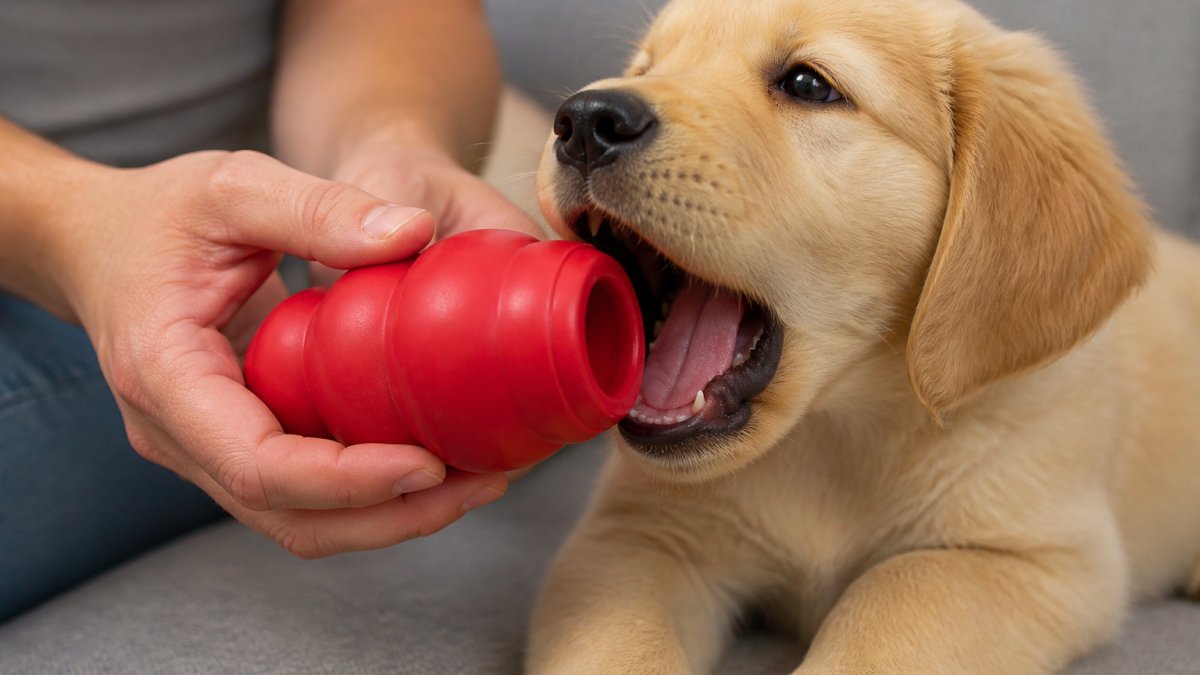
Here's a method we recommend for sizing toys to the jaw, not the breed chart:
- Open your puppy's mouth gently and look at the back molars
- Pick a toy wider than the distance across those molars
- Skip anything that fits entirely past the front teeth
Breed labels on packaging are a rough guide at best. A determined terrier can work a "medium" toy loose faster than a relaxed retriever. Mouth shape and jaw strength decide the fit, not the weight on the bag.
Watch Out
A toy that was safe at eight weeks can become a choking hazard by sixteen weeks. Puppies grow fast, and a toy that once couldn't fit now slides right back. Resize on a schedule, not on a hunch.
Safe Chew Toys for Puppies: Materials, Durability, and Chewing Strength
Material matters more than marketing. Safe chew toys for puppies come down to three things: what the toy is made of, how it fails, and how hard your puppy chews.
Match the material to the chewer:
- Light chewers: soft rubber and fabric toys hold up fine
- Medium chewers: firmer rubber with some give
- Heavy chewers: dense rubber built for bite resistance
Avoid toys harder than your puppy's teeth. Very hard plastic and antler-style chews can crack puppy teeth, and puppy teeth are placeholders that matter for life.
Our Vocal Pet Chew Toy is made from natural rubber with strong bite resistance, sized at 165 by 56 millimeters.

Rubber and Natural Rubber Toys
Rubber is the workhorse of puppy toys. It bounces, it cleans teeth, and it survives real chewing. Natural rubber tends to have more give than stiff synthetic blends, which means it flexes instead of cracking.
The catch: rubber is not indestructible. Check for tears along the edges and around any opening. A split rubber toy can shed chunks.
Rope, Plush, and Interactive Toys
Rope toys help clean between teeth, but loose strands are a swallowing risk. Trim frayed ends and retire a rope once it starts unraveling.
Plush toys are comfort objects, not chew toys. They're fine for gentle play and settling, but a plush toy left alone with a chewer becomes stuffing on the floor.
Our plush flying disc is made with non-toxic materials and designed for outdoor fetch and training. It's a play toy, not a leave-alone chew.
Best Toys for 8-Week-Old Puppies: Starting Safe from Day One
The best toys for 8-week-old puppies are small, soft, and simple. At this age, your puppy has needle teeth, a short attention span, and no idea how hard is too hard.
Start with:
- One soft rubber teething toy
- One small plush comfort toy
- One gentle interactive toy for short play sessions
Skip anything with squeakers small enough to pull out, and skip rope until your puppy's chewing settles. Keep sessions short.
This is also the age to build good habits. Rotate toys so novelty does the work, and put everything away when you can't watch.
Choking and Swallowing Hazards: What Every Puppy Owner Should Know
Choking and intestinal obstruction are the two toy-related emergencies that most often bring puppies into a clinic. Both usually trace back to a toy that was the wrong size, past its useful life, or left unattended with a determined chewer.
Know the difference between the two, because the response differs:
Vocal Pet Chew Toy Durable Rubber Teething Bite Resistant →
- Choking happens in the throat. Your puppy may paw at its mouth, gag, cough, drool heavily, or have trouble breathing. This is a minutes-matter emergency.
- Swallowing and obstruction happens farther down. A piece passes into the stomach or intestine and causes blockage. Signs can take hours to a day or more to appear.
Red flags to watch for on any toy:
- Squeakers, bells, or plastic parts that can be pulled out
- Stuffing that comes loose in clumps
- Openings a puppy's jaw can wedge into
What to Do If Your Puppy Swallows a Toy Piece
Stay calm, and act in this order:
- Remove your puppy from the toy and check the mouth only if it is safe to do so. Never put your fingers down a throat blindly; you can push a piece deeper or get bitten.
- Call your veterinarian or the nearest emergency clinic immediately. Describe what was swallowed, the approximate size, the material, and when it happened.
- Do not induce vomiting unless a veterinarian specifically instructs you to. Some materials and shapes cause more damage coming back up.
- Save the evidence. Bring the toy, the chewed remainder, and the packaging if you have it. Material, size, and shape help the vet decide whether to monitor, image, or intervene.
- Watch closely for worsening signs while you arrange care: repeated gagging, drooling, vomiting, a painful or distended belly, straining to defecate, or lethargy.
Watch Out
Never wait to "see if it passes." A swallowed toy piece can block the intestine, and symptoms often appear hours later. Early vet contact is always the safer call.
A common pattern veterinarians describe is the "almost fine" toy: a plush whose squeaker has been worked loose, or a rubber chew with a chunk missing that the owner assumes was simply lost. If you cannot account for a missing piece, treat it as swallowed until a vet says otherwise.

For general ingestion and toxin questions, the ASPCA Animal Poison Control Center is a reliable resource, but it does not replace your own vet for a suspected obstruction.
Key Takeaway
A toy that is missing a piece is not a toy with a piece missing. It is a potential obstruction until proven otherwise.
How to Inspect Dog Toys for Damage: A Practical Checklist
Inspection is where most toy guides stop at "check for damage." The useful version explains what you are actually looking for and why a toy fails. Run this routine once a week on the same day, and again before and after any high-energy session.
The Two-Minute Inspection Routine
Work through every toy in this order:
- Squeeze test. Compress the toy along its full length. Any crack, split, soft spot, or change in firmness means retire it. Rubber fails from the inside out, so a surface that looks fine can hide a tear at the core.
- Seam and edge check. Run a thumb along every seam and opening. Exposed filling, loose thread, or a gap at a seam is a fail.
- Tug test. Gently pull squeakers, ropes, tags, and attached parts. If anything moves more than it did when new, it is loosening.
Pro Tip
Photograph your puppy's toys when they are new. Comparing a photo to the toy in your hand makes wear and tear obvious in seconds, especially on plush and rope toys.
What "Non-Toxic" Does and Does Not Guarantee
Labels are a starting point, not a safety certification. Terms like "non-toxic" and "pet-safe" are largely marketing language unless a specific standard is cited.
What that means in practice:
- "Non-toxic" usually means the maker asserts the materials are not harmful if chewed. It does not guarantee the toy will not break into swallowable pieces.
- "Food-grade" refers to the material's intended contact use, not to the toy's durability. A food-grade rubber can still be torn apart by a strong chewer.
- "Indestructible" and "chew-proof" are not regulated claims. Treat them as marketing, and inspect more carefully, not less.
When a label is vague, judge the toy by how it fails: does it tear into large pieces, crumble into small bits, or shed long threads? Large, soft tears are easier to spot and remove; small hard fragments and long threads are the higher-risk failure modes.
Match the Inspection to the Failure Mode
Different materials fail differently, so weight your checks:
- Rubber and natural rubber: watch edges and openings for splits; squeeze for internal tears.
- Rope: trim frayed ends and retire once strands begin to unravel into long threads.
- Plush: check seams and squeaker pockets; stuffing clumps mean the toy is done as a chew object.
- Hard plastic and puzzle toys: look for cracks and loose moving parts, and confirm no small components can detach.
Replace on a schedule as well as on inspection. A toy that passes today can fail next week, and puppies grow into stronger chewers faster than most owners expect.
Safe Use of Food-Stuffable and Puzzle Toys
Food-stuffable and puzzle toys are excellent for enrichment, but they come with their own rules. Use them for meals and calm downtime, not as a replacement for supervision.
A few habits keep them safe:
- Choose a stuffable toy sized for your puppy's mouth
- Use soft, puppy-safe fillings and avoid anything that crumbles into small hard bits
- Wash stuffable toys after each use to prevent bacteria buildup
- Check the toy for cracks before refilling
Our interactive rubber chew toy combines a molar toy with food dispensing, which keeps a puppy engaged and working for a reward. For heavy chewers, our durable chew toy is built for tougher jaws with food-grade material.

Puzzle toys also help anxious puppies settle. A puppy with a job to do is a puppy less likely to chew the furniture.
Frequently Asked Questions
What toys can I give my 8-week-old puppy?
At 8 weeks, puppies need soft, small toys they can mouth without hurting their developing teeth. Choose natural rubber chew toys sized so they cannot be swallowed, plus a soft plush toy for comfort. Avoid hard nylon or antler chews until adult teeth arrive. Always supervise play and remove toys with loose pieces. The Vocal Pet Chew Toy Durable Rubber Teething Bite Resistant from Paws ND Whiskers is sized at 165 x 56 mm and made from natural rubber, making it a good fit for small mouths during early teething.
How often should I replace my puppy's toys?
Inspect toys daily and replace them as soon as you see cracks, tears, missing chunks, or exposed squeakers. For heavy chewers, that might mean every few weeks. Rotate toys every week to keep your puppy interested and to give each toy a rest. A toy that looks fine on the outside can hide internal damage, so squeeze and flex rubber toys regularly. If you cannot clean a toy thoroughly or it has been chewed down, replace it rather than risk a choking hazard.
Are rope toys safe for puppies?
Rope toys can be safe for gentle play and fetch, but they carry risks for determined chewers. Puppies can swallow loose threads, which may cause intestinal blockages. Choose tightly braided rope with no frayed ends, supervise every session, and take the rope away once it starts unraveling. Never leave a rope toy in the crate unattended. If your puppy is a strong chewer, swap rope for a solid rubber toy like the Pet Interactive Rubber Chew Toy Food Dispensing Durable Molar Toy, which is less likely to shed pieces.
What should I do if my puppy swallows part of a toy?
Call your veterinarian or an emergency animal hospital immediately, even if your puppy seems fine. Signs of trouble include vomiting, retching, drooling, lethargy, or refusing food. Do not induce vomiting unless your vet tells you to. Try to identify what was swallowed and how large it was, and bring the remaining toy piece with you. Surgery is sometimes needed for blockages, so acting fast matters. Afterward, inspect all toys for damage and remove any with loose parts from your puppy's reach.
Choosing safe puppy toys is a moving target. Your puppy changes size, jaw strength, and chewing style every few weeks, and the toy that worked last month may not work now. That's the challenge, and it's why we built Paws ND Whiskers around premium, reliable pet essentials. Our toys are made with non-toxic materials, strong bite resistance, and thoughtful sizing, so you can match each stage of your puppy's growth with confidence. Add to cart and give your puppy a safer start.

