

Cart
0

Table of Contents
- What Makes a Kitten Scratching Post Durable
- Sisal vs Carpet Scratching Posts: Which Lasts Longer
- How to Train a Kitten to Use a Scratching Post
- Why a Stable Cat Scratching Post Base Matters
- Height, Placement, and Indoor vs Outdoor Use
- Assembly, Maintenance, and Replacing Worn Surfaces
- Frequently Asked Questions
Last Updated: September 28, 2026
What Makes a Kitten Scratching Post Durable
Durable kitten scratching posts are built from a solid wood core, wrapped in tightly wound sisal rope, and anchored by a wide, heavy base that will not tip when a kitten launches itself at it.
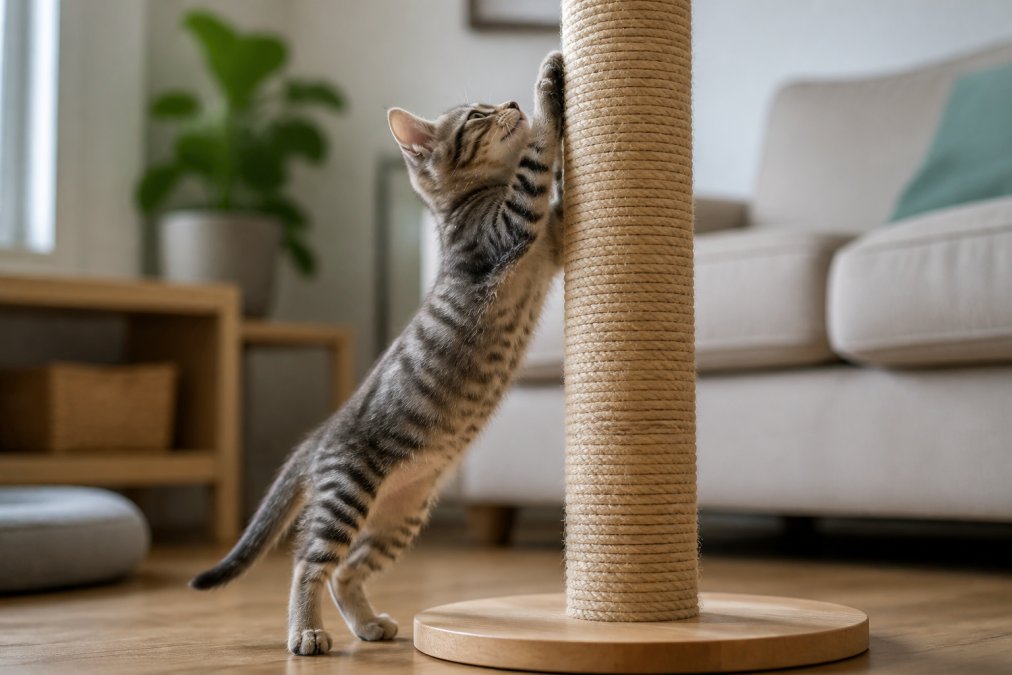
Material Durability and Construction
The core of a long-lasting post is wood, not hollow cardboard or plastic tubing. Cats scratch with real force, and a post that flexes under that pressure feels unstable, so the cat stops using it.
Look for these construction markers:
- Solid wood or plywood core, not hollow tube
- Tightly wound sisal with no loose strands
- Reinforced joints where the post meets the base
- Replaceable parts so you can swap the rope, not the whole unit
Stability and Base Design
A stable cat scratching post base is the difference between a post your kitten uses daily and one that collects dust in the corner. Cats need to feel secure when they stretch to full height, and a wobble kills that confidence instantly.
Pro Tip
Test stability before you buy: press the top of the post with one finger. If it tips or flexes more than a small amount, your kitten will feel that same movement and avoid it. A post that moves is a post that fails.
Sisal vs Carpet Scratching Posts: Which Lasts Longer
Sisal rope generally outlasts carpet on a scratching post, but the reason is mechanical, not marketing. Sisal is a hard, plant-derived fiber with a rough, open weave. When a cat rakes downward, the claws catch on individual strands and tear at the fiber surface rather than slicing through a backing. Carpet is the opposite: looped or cut pile is anchored into a latex or glue backing, and once the claws pull a loop free, the whole tuft unravels.
| Surface | Wear pattern | Ingest risk | Rewrap difficulty | Typical lifespan under one kitten |
|---|---|---|---|---|
| Tightly wound sisal rope | Fibers fray gradually; surface stays grippable | Low, strands stay attached | Easy with new rope and a staple gun | 1-3 years before a rewrap |
| Looped carpet | Tufts pull free in clumps | Higher, loose pile and backing bits | Hard; glue and staples must be removed | 3-9 months |
| Jute twine | Softer, compresses and mats | Low | Easy, but wears faster than sisal | 6-18 months |
Why Your Cat May Prefer One Texture Over Another
Texture preference is not random. Scratching is a scent-marking and claw-conditioning behavior, and cats choose surfaces that give the right amount of resistance. A cat that scratches horizontally on rugs is often telling you it wants a flat, low-resistance surface. A cat that reaches up a doorframe wants vertical resistance and a full-body stretch. Matching the post to the cat's existing style is more reliable than buying the most expensive option.
A few patterns worth watching for:
- Vertical stretchers, grip high, lean back, and pull. They need tall sisal with a firm core.
- Horizontal diggers, scratch flat on carpet or a mat. A sisal-wrapped incline or a flat sisal pad suits them better than a pole.
- Corner workers, scratch doorframes and sofa arms. Place a post directly against that corner so the post intercepts the habit.
Pro Tip
Run a two-week test before committing. Offer a sisal post and a carpet or jute post side by side in the same room. Note which one your kitten returns to after naps. Buy more of that texture, not the one with the best reviews.
The Furniture-Training Trade-Off
Carpet posts teach cats that carpet is acceptable to scratch. That is the hidden cost. A kitten that learns to dig into a carpet post will not distinguish it from the carpet on your stairs. Sisal and jute look and feel nothing like upholstery, so the behavior transfers less easily to your furniture.
How to Train a Kitten to Use a Scratching Post
Training a kitten to use a scratching post takes consistency, not force. The process works best when you make the post the most attractive scratching option in the room and reward every correct use.
Follow these steps:
- Set the post beside a favorite resting spot
- Gently guide your kitten's paws onto the sisal when it starts to scratch furniture
- Reward immediately with praise or a treat
- Never punish scratching on furniture; redirect instead
- Keep the post in the same spot for at least a month
Watch Out
Never hold your kitten's paws and force them down the post. This creates a negative association, and many cats will avoid the post entirely afterward. Redirect, reward, repeat.
Why a Stable Cat Scratching Post Base Matters
A stable base protects your cat's confidence and your furniture at the same time. When a post tips mid-scratch, the kitten learns that scratching there feels unsafe, so it returns to the couch, which never moves.
Height, Placement, and Indoor vs Outdoor Use
A scratching post should be tall enough for your kitten to stretch to full length with paws extended overhead, and most adult cats need at least 76 cm of vertical scratching surface. Kittens grow fast, so buying for adult height saves you a replacement later.
Placement follows a few rules:
- Put the post where your cat already scratches
- Keep it near sleeping areas and social spaces
- Offer at least one post per cat, plus one extra
- Add a multi-level tower if you have the floor space
Assembly, Maintenance, and Replacing Worn Surfaces
Assembly is usually straightforward: attach the post to the base, tighten the assembly hardware, and check for wobble. Setup typically takes under fifteen minutes with the included tools. The part most guides skip is what happens eighteen months later, when the rope is frayed and the core is still perfectly good. That is where durability actually pays off, if you know how to rewrap.
How to Rewrap a Sisal Scratching Post
Rewrapping is the highest-value repair skill for a cat owner. It costs a fraction of a new post, keeps a proven-stable base in service, and takes about 30-45 minutes once you have done it once.
What you need:
- 3/16-inch or 1/4-inch sisal rope, 1/4-inch lasts longer; 3/16-inch wraps tighter around narrow posts
- A staple gun with 1/4-inch or 3/8-inch staples
- Scissors or wire cutters
- Work gloves, sisal is abrasive
- Optional: a hot glue gun for the starting anchor
Steps:
- Strip the old rope. Cut it away with scissors or a utility knife. Do not try to unwind it, old sisal is usually glued or stapled at intervals and will not come off cleanly.
- Inspect the core. Look for cracks, soft spots, or splinters. A solid wood or plywood core should be sound. If the core is cracked or flexes, replace the whole post, rewrapping a broken core is wasted effort.
- Sand any rough spots on the core so the new rope sits flat.
- Anchor the first wrap. Staple the rope end to the base of the post, then wrap two or three tight turns over the staple to hide it. A dab of hot glue under the first turn helps it hold while you work.
- Wrap upward under tension. Keep steady pressure so each turn sits flush against the last. Gaps let claws slip between strands and pull the rope loose.
- Staple every few inches. Drive a staple through the rope into the core at intervals, angled so the staple head sits below the rope surface. This is what prevents the whole wrap from sliding down over time.
- Finish the top. Staple the final end, then tuck it under the last turn or cap it with a small piece of matching rope.
- Test it. Press a fingernail into the wrap. It should feel firm and slightly springy, not loose or hollow.
Watch Out
Do not use treated lumber, pressure-treated wood, or any core that has been stained or sealed with a finish. Cats groom their claws with their mouths after scratching, and treated or finished wood can expose them to chemicals you would not want them ingesting.
Routine Maintenance That Extends Post Life
Maintenance keeps a good post good. Tighten bolts monthly, vacuum loose fiber from the sisal, and rotate the post if one side wears faster. When the rope frays through to the core, rewrap rather than replace.
| Task | How Often | Why It Matters |
|---|---|---|
| Tighten base hardware | Monthly | Prevents wobble and tipping |
| Vacuum sisal surface | Weekly | Removes loose fiber and dust |
| Inspect rope for fraying | Monthly | Catches wear before the core shows |
| Rewrap or replace rope | Every 1-2 years | Restores the scratching surface |
| Check base for cracks | Every 6 months | Keeps the post stable long-term |
| Rotate the post 180° | Every 3 months | Evens out wear on one-sided scratchers |
When to Repair vs. Replace
Not every post is worth saving. Use this rule of thumb:
- Repair if the core is solid, the base is intact, and only the rope is worn.
- Replace if the core is cracked, the base has split, or the post flexes when you press the top.
- Repair the base, replace the post if the base is heavy and stable but the pole itself is hollow or broken, many modular designs let you swap just the pole.
Frequently Asked Questions
What is the most durable material for cat scratching posts?
Sisal rope wrapped around a solid wood core holds up longest for most kittens. The tight vertical wrap resists fraying better than loose carpet or cardboard, and the wood core keeps the post from bending under daily scratching. Jute fiber is a close second and offers a slightly softer texture. Avoid posts made only of thin cardboard or glued-on carpet squares, since these shed fibers quickly and need frequent replacement.
How tall should a scratching post be for a growing kitten?
A kitten needs a post tall enough to stretch fully upward without reaching the top. For most kittens, that means at least 24 inches, and adult cats often need 30 inches or more. Buying a taller post now saves you from replacing it in a few months. A post that is too short encourages your kitten to scratch furniture instead, because there is no room for a full vertical stretch.
Are sisal rope or carpet scratching posts better for kittens?
Sisal rope is generally better for durability and claw health. The rough texture files down claw sheaths as your kitten scratches, and it does not unravel the way looped carpet can. Carpet posts feel softer and some kittens prefer them, but carpet fibers can snag claws and shed over time. Many owners start with sisal and add a carpet-covered post as a secondary option.
Can a durable scratching post help protect my furniture?
Yes, when it is placed correctly and tall enough for a full stretch. A sturdy post gives your kitten an appropriate scratching outlet, which redirects clawing away from sofa corners and chair legs. Put the post near the furniture your kitten already targets, and reward scratching on the post with treats or praise. A wobble-free base matters here, because a post that tips mid-scratch teaches your kitten to avoid it.

