

Cart
1
Table of Contents
- Why Orthopedic Beds Matter for Dogs With Arthritis
- Signs of Arthritis in Dogs: When Your Senior Dog Needs Support
- Memory Foam vs. Orthopedic Dog Beds: What's the Real Difference?
- Best Dog Bed Thickness for Senior Dogs: Finding the Right Support Level
- Key Features That Make Orthopedic Beds Effective
- How to Choose the Right Size and Fit
- Material Safety: What to Avoid
- Frequently Asked Questions
Last Updated: September 25, 2026
Why Orthopedic Beds Matter for Dogs With Arthritis
An orthopedic dog bed is specifically designed to provide therapeutic support for dogs experiencing joint pain, mobility issues, and the effects of aging. These beds use high-density memory foam and ergonomic construction to distribute weight evenly, reducing pressure on sensitive joints and supporting proper spinal alignment. For senior dogs and those with arthritis, the difference between a standard bed and a quality orthopedic option often translates directly into comfort, mobility, and quality of life.
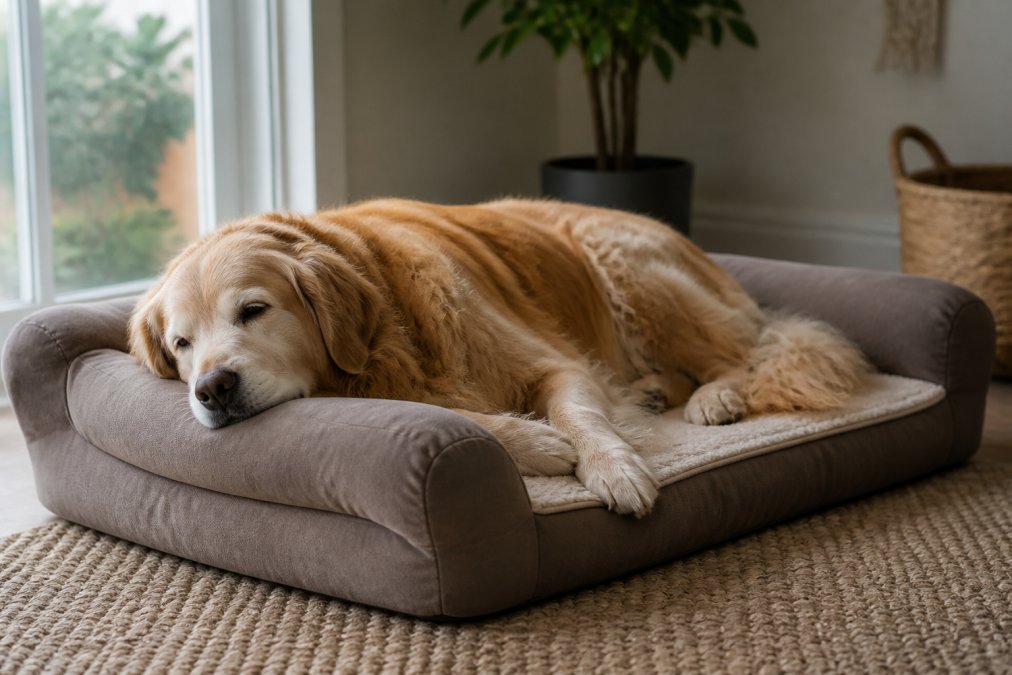
Dogs with osteoarthritis experience chronic pain and stiffness, particularly in the hips, shoulders, and lower spine. A regular bed offers minimal support, forcing arthritic joints to work harder throughout the night. The best orthopedic beds for arthritic dogs actively reduce this strain by conforming to your dog's body shape and providing targeted pressure point relief where joints need it most.
What makes orthopedic support different from basic cushioning is the engineering. High-density memory foam doesn't just feel soft, it responds to body heat and weight, creating a customized support surface that adapts as your dog moves. This therapeutic support helps reduce inflammation, improve circulation, and allow dogs to wake with less stiffness and pain.
At Paws ND Whiskers, we understand that choosing the right bed for an arthritic dog isn't just about comfort, it's about enhancing your pet's life. The investment in a quality orthopedic bed can contribute to improved mobility and better sleep quality.
Signs of Arthritis in Dogs: When Your Senior Dog Needs Support
Recognizing arthritis early helps you intervene with proper support before mobility becomes severely compromised. Common signs include reluctance to jump on furniture, difficulty rising after rest, limping that worsens in cold weather, and visible stiffness after sleeping. Many dog owners mistake these changes for normal aging, missing the opportunity to provide targeted relief.
Other indicators include behavioral changes like increased irritability, reluctance to play, or spending more time lying down. Dogs may also lick or chew at their joints more frequently as they try to self-soothe pain. If your dog shows any of these signs, a supportive orthopedic bed can make an immediate difference in comfort and mobility.
The best time to introduce orthopedic support is when you first notice these changes, not after arthritis has progressed significantly. Early intervention with proper bedding, combined with veterinary guidance, helps slow progression and maintains quality of life longer. Senior dogs benefit most from beds that provide consistent, reliable support night after night.
Memory Foam vs. Orthopedic Dog Beds: What's the Real Difference?
This distinction confuses many pet owners because the terms overlap. Memory foam is a material, while orthopedic refers to therapeutic design. A bed can contain memory foam without being truly orthopedic, just as an orthopedic bed might use multiple foam types for optimal support.
Standard memory foam beds offer basic cushioning and conform to your dog's shape, which feels comfortable initially. However, many standard memory foam beds use lower-density foam, typically 1.5 to 2.5 pounds per cubic foot, that compresses over time, flattening out within 6 to 12 months. This happens because lower-density foams lack the structural integrity to resist repeated compression cycles. Each night your dog lies down, the foam cells collapse slightly, and without sufficient density to rebound fully, the bed gradually loses height and support.
True orthopedic dog beds combine high-density memory foam (4 to 5 pounds per cubic foot) with thoughtful design features: bolster-style edges for neck and head support, adequate thickness to prevent bottoming out, and sometimes additional layers of egg-crate foam for enhanced pressure distribution. The key technical difference lies in the foam's Indentation Load Deflection (ILD) or Indentation Force Deflection (IFD) rating, a measure of how much force is needed to compress the foam by 25 percent. Orthopedic-grade foams typically have an ILD rating of 14 to 18, meaning they require significant pressure to compress, whereas budget memory foam often rates 8 to 12 ILD, compressing much more easily under your dog's weight.
When a foam bottoms out, meaning your dog's weight presses through the entire depth to the underlying support structure, the therapeutic benefit disappears entirely. The pressure that should be distributed across the foam's surface now concentrates on your dog's joints and spine, actually worsening arthritis symptoms. This is why thickness and density work together: a 6-inch bed made from 2-pound foam will bottom out faster than a 5-inch bed made from 4.5-pound foam.
The real difference comes down to durability and therapeutic consistency. An orthopedic bed maintains its support structure for 3 to 5 years or longer because the high-density foam resists compression. A standard memory foam bed may feel nice initially but offers diminishing support as the foam breaks down, typically losing 30 to 40 percent of its original thickness within the first year of nightly use. For arthritic dogs requiring consistent joint support, orthopedic engineering, specifically high-density foam with proper ILD rating, matters far more than basic cushioning.
Key Takeaway
When comparing beds, ask manufacturers for the foam's ILD rating and density in pounds per cubic foot. Orthopedic-grade foam should measure 4 to 5 lbs/cubic foot with an ILD of 14 or higher. Budget beds often hide this information because their foam rates significantly lower.
Best Dog Bed Thickness for Senior Dogs: Finding the Right Support Level
Thickness directly impacts how well a bed supports an arthritic dog's joints. Beds thinner than 4 inches often compress too easily, allowing your dog's weight to press through to the floor beneath, eliminating the therapeutic benefit. A dog with arthritis needs enough foam depth that pressure remains distributed throughout the material rather than concentrated at pressure points.
The ideal thickness range for senior dogs with arthritis is 5 to 8 inches. This depth provides genuine pressure relief while maintaining enough structure to support proper spinal alignment. Beds in this range use high-density memory foam that resists compression and maintains therapeutic properties through years of nightly use.
However, thickness alone doesn't guarantee quality. A 6-inch bed made from low-density foam that compresses easily is less effective than a 5-inch bed using premium high-density material. The foam density rating matters as much as the total thickness. High-density foam typically measures 4 to 5 pounds per cubic foot, dense enough to provide support without excessive softness that leads to bottoming out.
Consider your dog's size and weight when evaluating thickness. Larger dogs and those weighing over 75 pounds benefit from the thicker end of the range (7-8 inches) to prevent their weight from compressing the foam too much. Smaller dogs may do well with 5 to 6 inches.
Key Features That Make Orthopedic Beds Effective
High-Density Memory Foam and Pressure Point Relief
High-density memory foam forms the foundation of effective orthopedic support. This material responds to body heat, gradually softening to conform to your dog's shape while maintaining enough firmness to support joints and spine. The foam's density rating determines how well it resists compression over time.
Water-Resistant Covers and Durability
A water-resistant cover protects the foam from accidents, spills, and moisture that can degrade the bed's structural integrity over time. For senior dogs, this feature becomes especially valuable since older dogs sometimes have reduced bladder control. A removable, machine-washable cover makes cleaning simple without damaging the underlying foam.
How to Choose the Right Size and Fit
Selecting the correct size prevents your dog from curling up uncomfortably or having limbs hang off the edge. An undersized bed forces arthritic dogs into cramped positions that aggravate joint pain rather than relieving it. The bed should be large enough for your dog to stretch out fully or curl up with comfort.
Material Safety: What to Avoid
Non-toxic materials become critical when selecting a bed your dog will use 8+ hours daily. Some lower-quality orthopedic beds use foams treated with chemicals that can off-gas or cause allergic reactions. Senior dogs have compromised immune systems and sensitive skin, making them more vulnerable to reactions from low-quality materials.
When evaluating a bed, ask the manufacturer for:
- CertiPUR-US certification documentation for the foam
- Specific flame-retardant type used (inherent vs. chemical treatment)
- VOC emissions testing results or low-VOC claims
- Oeko-Tex or similar fabric certification for the cover
- Warranty details on foam degradation or cover durability
Watch Out
Do not assume "memory foam" automatically means safe. Budget memory foam often uses recycled foam blended with virgin foam and chemical binders to reduce cost. Always request certification proof before purchasing, especially for senior dogs with existing respiratory or skin sensitivities.
Frequently Asked Questions
Do orthopedic dog beds actually help with joint pain and arthritis?
Yes. Orthopedic beds reduce pressure on arthritic joints by distributing your dog's weight evenly across high-density memory foam. This decreases strain on hips, elbows, and spine, areas where arthritis commonly develops. The bolster-style design provides cervical support, helping senior dogs maintain proper spinal alignment while resting. Orthopedic beds can contribute to improved mobility and less stiffness for dogs with osteoarthritis.
What thickness should I look for in an orthopedic dog bed for a senior dog?
For senior dogs with arthritis, aim for 4 to 6 inches of total bed thickness. This range provides adequate cushioning and support without being so thick that your dog struggles to climb in or out. Beds thinner than 3 inches offer insufficient pressure relief, while beds over 8 inches can be difficult for mobility-challenged dogs to access. Check the foam density rating, higher density (typically 4 to 5 pounds per cubic foot) offers better long-term durability and support.
What is the difference between memory foam and egg-crate foam in orthopedic dog beds?
Memory foam conforms precisely to your dog's body, distributing weight evenly and providing superior pressure point relief, ideal for arthritic dogs. It retains heat, which can be comforting for senior dogs. Egg-crate foam (convoluted foam) has a waffle-like surface that improves airflow and runs cooler, making it better for dogs prone to overheating. However, egg-crate foam compresses faster and may offer less joint support than high-density memory foam.
How do I know if an orthopedic bed will actually last and not flatten out?
Look for beds with high-density memory foam (4+ pounds per cubic foot) and a 'no-flat' or durability guarantee. Check if the cover is removable and machine-washable, this extends bed life by reducing wear. Read reviews specifically mentioning long-term durability; beds that maintain support after 12+ months are reliable. Avoid low-density foam under 3 pounds per cubic foot, which compresses quickly. Quality orthopedic beds from reputable manufacturers may include warranties covering foam degradation.

