

Cart
1

Table of Contents
- Quick Comparison: Best Grooming Brushes for Cats
- How We Evaluated These Cat Brushes and Combs
- Brush Types and What Each One Does
- Best Cat Deshedding Tools for Heavy Shedding
- How to Brush a Cat Without a Struggle
- Choosing the Best Brush for Long-Haired Cats
- Cleaning, Care, and How Long Brushes Last
- Conclusion
- Frequently Asked Questions
Last Updated: October 16, 2026
Quick Comparison: Best Grooming Brushes for Cats
Finding the best grooming brushes for cats comes down to matching the tool to your cat's coat, not buying the biggest brush on the shelf. The right brush turns shedding control into a two-minute habit your cat tolerates.
Here's how our top picks stack up:
| Brush | Price | Best For | Key Feature |
|---|---|---|---|
| Self Cleaning Slicker Brush | $19.96 | Most cats, all coat types | Retractable bristles, one-click clean |
| Deshedding Rake Tool | $16.83 | Heavy shedders, undercoat | Arc blade reaches the undercoat |
| Double Sided Dematting Comb | $20.65 | Long-haired cats, mats | Two sides for detangling and finishing |
| Silicone Massage Comb | $26.89 | Sensitive skin, kittens | Soft teeth, gentle massage action |
| Grooming Glove | $27.29 | Cats who fear brushes | Hand-shaped, feels like petting |
The self-cleaning slicker is our overall pick for most households. It handles loose hair, light tangles, and dander without scratching skin, and the retracting bristles mean you clean it in seconds.

How We Evaluated These Cat Brushes and Combs
We judged every brush on five points: dead-hair removal, feel against skin, ease of cleaning, durability, and whether a nervous cat will sit still for it.
Coat type drove most of our decisions. A tool that works wonders on a short-haired cat can yank and pull on a long-haired one. We also weighed skin sensitivity heavily, since senior cats and kittens have thinner skin that scratches easily. The ASPCA's cat grooming guidance makes the same point: gentle, regular brushing matters more than force.
Price came last. Every brush in our lineup sits between $11.61 and $32.17.
Brush Types and What Each One Does
A slicker brush is a paddle-style tool with fine bent wire bristles that reach into the coat to lift loose hair and light tangles. It's the workhorse of cat grooming and the brush most owners should start with. Bent wires flex and release when they hit resistance, so a good slicker glides instead of scratching.
The other common types serve narrower jobs:
- Bristle brushes use soft, closely packed bristles. Best for short-haired cats and finishing touches, since they polish the coat and spread natural oils without reaching the undercoat. On a dense double coat, they mostly skim the surface.
- Deshedding and undercoat tools use a stainless steel blade or rake with teeth that hook under the topcoat to pull dead undercoat before it lands on your furniture. Essential during seasonal shedding, but the most aggressive category.
- Combs have metal teeth spaced for detangling. A de-matting comb works a formed mat apart from the edge inward instead of pulling it tighter.
- Grooming gloves and mitts have rubber nubs on the palm. They feel like petting, making them the best entry point for cats that bolt at the sight of a brush, though they remove far less hair per pass than a slicker.
Matching the tool to coat, age, and skin
Hair length is only the first filter. The decision guide most owners actually need looks like this:
| Your cat | First tool | Why |
|---|---|---|
| Short, single coat | Bristle brush or slicker | Loose hair sits near the surface; deep tools are overkill |
| Dense or double coat | Slicker, then deshedding rake | The rake reaches undercoat the slicker can't |
| Long coat | Slicker daily, comb for mats | Two tools, two jobs |
| Kitten | Soft silicone comb | Thin skin, small body, short attention span |
| Senior cat | Soft slicker or silicone | Skin thins with age and scratches easily |
| Sensitive skin | Silicone or rubber | No wire points against the skin |
| Cat that fears brushes | Grooming glove | Feels like petting, not grooming |
Age and skin sensitivity are the two variables competitors skip. Kittens and senior cats have thinner skin than healthy adults, so a wire slicker that's fine on a two-year-old can scratch a twelve-year-old. If your cat flinches at light pressure or has a skin condition, start with silicone or rubber and move to wire bristles only once your cat tolerates the sensation.

Pro Tip
Work in the direction the fur grows, and stop at the first sign of tugging. Most cats tolerate grooming far better when sessions stay under five minutes and end before the cat gets restless.
How to tell if a brush is actually working
A brush doing its job leaves a visible pad of loose hair after a few passes, and your cat's coat looks smoother rather than rougher. A brush that isn't working either skims the surface or drags and pulls. If the brush is nearly empty but fur still comes off when you pet your cat, you may be using a brush not suited for your pet's coat.
Best Cat Deshedding Tools for Heavy Shedding
Heavy shedding is an undercoat problem, and a standard slicker often can't reach it. The Pet Deshedding Grooming Comb Hair Removal Rake Tool ($16.83) uses a stainless steel arc blade that slides under the topcoat to lift dead undercoat before it mats, and comes in two blade widths.
For cats that shed year-round, the Pet Grooming Dematting Comb with Tank ($22.76) pairs a cleaning comb with cotton pads and a wash-free solution.

Undercoat tools are more aggressive than a slicker, so two or three sessions a week is plenty. Overuse can irritate skin and potentially leave bald patches.
Watch Out
Never press a deshedding blade hard against the skin. Light, even strokes along the coat's direction are enough. Pressing too firmly can cause skin irritation.
How to Brush a Cat Without a Struggle
The trick to brushing a cat is short, calm sessions that end before the cat decides it's done. Start with the shoulders, back, and sides.
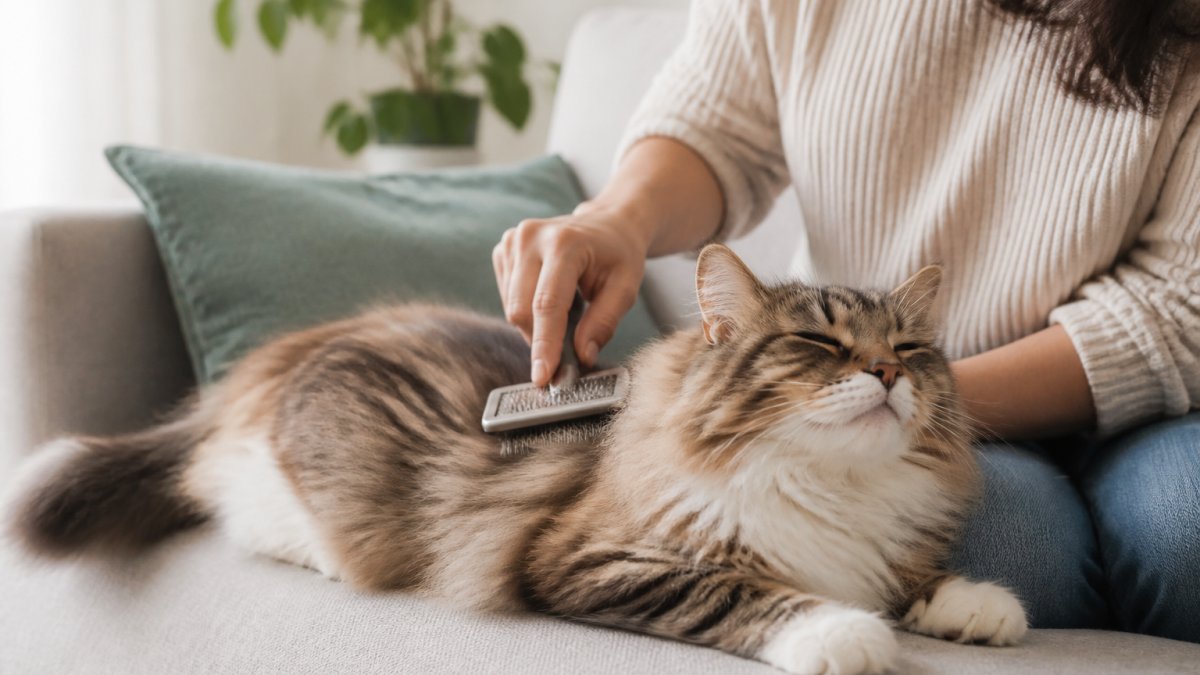
A simple routine that works:
- Let your cat sniff the brush before you use it.
- Brush for two minutes, then stop and offer a treat.
- Repeat daily for a week so the brush becomes routine.
- Add a second two-minute session once your cat stops flinching.
- Switch to a grooming glove if your cat never settles.
Watch for warning signs: flattened ears, a twitching tail, or a sudden freeze all mean stop now.
The Pet Grooming Glove ($27.29) is the fix for cats that refuse a traditional brush.
Large Pet Grooming Beauty Brush Tool →
Choosing the Best Brush for Long-Haired Cats
Long-haired cats need two tools, not one. A slicker handles daily loose hair, while a comb or double-sided dematting tool breaks up tangles behind the front legs, under the collar, and around the tail base.
The Double Sided Pet Grooming Brush ($20.65) covers both jobs in one handle. One side detangles, the other smooths, and the button hair-removal feature saves you digging hair out of the bristles.
For daily maintenance on a long-haired cat, the Self Cleaning Slicker Brush ($19.96) is the better first pass.
The order of operations matters
Brushing a long-haired cat in the wrong order is how you turn a small tangle into a mat. Work in this sequence:
- Slicker first, whole body. Lift loose hair and surface tangles before anything touches a knot.
- Comb second, problem zones only. Behind the front legs, under the collar, around the tail base, and behind the ears.
- De-matting tool last, and only on real mats. Never run a de-matting blade over healthy coat as a routine step.
- Stop at the skin line. If the comb won't pass through without force, the mat is too tight for a comb, see the warning below.
Pressure, direction, and the signs to stop
Use the lightest pressure that still moves the tool through the coat. You are guiding, not scrubbing. Brush in the direction the fur grows, and use short strokes rather than long drags, because a long stroke builds friction and ends in a yank.
Watch for these signals and stop the session immediately if you see them:
- Flattened ears or a twitching tail, early stress signals.
- A sudden freeze, your cat is tolerating it, not enjoying it, and is about to bolt.
- Skin twitching along the back, the classic sign the brush is pulling.
- Any attempt to bite the brush or your hand, the session is over.
Watch Out
Never cut a mat out with scissors. If a mat is tight against the skin, won't comb out with light pressure, or the skin underneath looks red, broken, or irritated, stop and have a professional groomer or your veterinarian remove it.
When brushing isn't enough
Some problems don't resolve with a better brush. Contact a professional groomer or your veterinarian if you notice:
- Mats that keep returning in the same spots within days of brushing them out.
- Sudden heavy shedding or bald patches, which can point to a skin, thyroid, or parasite issue rather than normal coat turnover.
- Skin changes, redness, scabs, dandruff that doesn't clear, or a greasy coat that stays greasy after brushing.
- Pain or aggression during grooming that's new for your cat.
- A cat that stops grooming itself, which is often an early sign of feeling unwell.
A brush manages normal coat. It can't fix a medical or behavioral problem.
Key Takeaway
Long-haired cats need daily brushing, not weekly. Mats form fast in the dense areas, and once a knot tightens against the skin, a comb alone won't fix it safely.
Cleaning, Care, and How Long Brushes Last
A dirty brush spreads dander and oil back onto your cat, so clean it after every session.
How long a brush lasts depends on the bristles. Stainless steel wires and teeth hold their shape for years if kept dry. Rubber and silicone wear faster, especially if a cat chews them.
Replace any brush when the bristles bend, the teeth snag, or the handle loosens. A worn slicker drags instead of gliding, and dragging is what makes cats hate grooming.
Best For
The Self Cleaning Slicker Brush suits most first-time owners and short-to-medium coats. The Deshedding Rake Tool is the better pick for cats that shed heavily or blow their coat each season.
Conclusion
Every cat owner hits the same wall eventually: the fur keeps coming, and the brush you bought isn't the right one. Matching the tool to your cat's coat type, and keeping sessions short and calm, solves most of it.
At Paws ND Whiskers, we stock grooming tools built for exactly that. Our self-cleaning slicker brush clears loose hair in one click, our deshedding rake reaches the undercoat, and our grooming glove works for cats that won't sit still for anything else. Add to Cart and make brushing a comfortable part of your cat's routine.
Frequently Asked Questions
What is the most effective way to brush a cat's fur?
Work in the direction the coat grows, using light strokes rather than pressure. Start on the back and shoulders, then move to the chest, belly, and tail. A slicker brush handles loose hair and tangles on most coat types, while a comb checks for missed mats. Keep sessions short, around five minutes, and stop before your cat gets restless. Regular brushing removes dead hair before it lands on furniture or gets swallowed during self-grooming.
Which type of brush is best for a long-haired cat?
A slicker brush with fine bent wires reaches through the topcoat and lifts loose undercoat, which is why it suits long-haired cats best. Follow with a wide-tooth comb to check for mats behind the ears, under the legs, and at the tail base. Daily brushing prevents tangles from tightening into mats. If your cat already has tight knots, a de-matting comb or rake removes them with less tugging.
What brush works best for a short-haired cat?
Short-haired cats do well with a bristle brush or a rubber grooming glove. Bristle brushes pick up dander and surface debris while spreading natural oils for a shinier coat. Rubber gloves are gentle on sensitive skin and double as a massage, which helps cats that dislike traditional brushes. Brush once or twice a week, and more often during seasonal shedding when loose hair builds up quickly.
Can the wrong brush hurt a cat's skin?
Yes. Stiff metal teeth, dull clipper-style blades, and heavy pressure can scratch skin, pull at knots, and cause pain. Signs of trouble include flinching, twitching skin, or trying to bite the brush. Choose tools with rounded or coated tips, use gentle strokes, and never force a brush through a mat. If a mat will not release, a de-matting comb or a groomer is the safer option.
How often should you brush your cat?
Most cats do well with two to three sessions per week, about five to ten minutes each. Long-haired cats often need daily brushing to stop tangles from forming. Short-haired cats can manage with once or twice a week outside shedding season. During spring and fall shedding, increase frequency to daily for a week or two. Cats that groom themselves heavily still benefit, because brushing removes loose hair they would otherwise swallow.

