

Cart
1

Table of Contents
- Understanding the Teething Phase
- Signs Your Puppy Is Teething
- Safe Materials for Puppy Chew Toys
- 5 Best Budget Toys for Teething Puppies
- How to Stop Puppy Biting and Nipping
- When Do Puppies Stop Teething
- Choosing the Right Toy for Your Puppy
- Cleaning and Maintaining Budget Chew Toys
- Frequently Asked Questions
Last Updated: September 30, 2026
Understanding the Teething Phase
Puppies go through a natural teething phase between 3 and 6 months of age when their baby teeth fall out and adult teeth begin to emerge. During this time, their gums become sore and tender, creating an intense need to chew. This discomfort drives puppies to seek relief through constant gnawing on anything they can find, from furniture to your hands. Understanding this developmental stage helps pet owners respond with patience and the right tools.
Providing appropriate chew toys designed for teething relief can redirect this natural behavior and protect your home from destruction. Budget-friendly options exist that are both safe and effective for managing gum massage and jaw development during this critical period.
Signs Your Puppy Is Teething
Your puppy is likely teething if you notice excessive drooling, swollen gums, or a tendency to chew on everything within reach. Puppies may also become more irritable or have difficulty eating their regular food. Some puppies experience mild fever during teething, and you might notice them pulling at their toys with unusual intensity or refusing certain foods because chewing is painful (pubmed.ncbi.nlm.nih.gov).
Another common sign is increased nipping behavior. Teething puppies often nip more frequently as they seek ways to relieve gum pressure. You may also see small teeth in their food bowl or around your home as baby teeth shed. These signs typically peak around 4 to 5 months of age and gradually subside as adult teeth fully emerge.
Safe Materials for Puppy Chew Toys
Selecting chew toys made from non-toxic materials is essential for your puppy's safety, but knowing which materials to trust requires understanding both what's safe and how to verify it. The safest options for teething puppies include natural rubber (like food-grade silicone), braided cotton rope, and food-grade nylon. These materials are durable enough to withstand aggressive chewing while remaining gentle on developing teeth and gums.
How to identify safe materials when shopping:
Look for toys labeled "non-toxic," "BPA-free," and "phthalate-free" on packaging or product descriptions. Reputable manufacturers will clearly state the material composition and often include certifications from organizations that test pet products for safety. Natural rubber toys should feel slightly flexible and have a consistent color; artificial rubber may feel overly rigid or have an unnatural sheen. Cotton rope toys should be 100% cotton without synthetic blends, which can shed fibers more easily.
Materials to avoid:
Cheap plastic toys often contain BPA and phthalates, chemicals that leach into your puppy's mouth during extended chewing and can cause digestive upset or long-term health concerns. Untreated wood splinters easily, creating sharp fragments that can lodge in gums or be swallowed. Toys with small glued-on parts (plastic eyes, bells, or decorative elements) pose choking hazards if they detach during vigorous chewing. Rawhide and compressed leather alternatives may seem budget-friendly but often contain preservatives and adhesives that aren't formulated for puppies' developing digestive systems.
Why material durability matters for safety:
A toy that breaks apart quickly isn't just wasteful, it's a safety risk. When budget toys degrade, they shed small pieces that puppies may swallow, potentially causing intestinal blockages. Natural rubber and quality nylon resist splintering and maintain structural integrity through weeks of use, reducing the risk of ingestion. Cotton rope toys require closer supervision because the fibers can unravel; if your puppy swallows large amounts of rope, it can tangle in the intestines. This is why rope toys are best for interactive, supervised play rather than solo chewing sessions.
Testing toy safety at home:
Before giving a new toy to your puppy, perform a simple durability test: apply firm pressure with your thumbnail or fingernail. If the material dents easily, cracks, or shows signs of degradation, it will likely fail under your puppy's teeth. Smell the toy, any strong chemical odor suggests off-gassing of harmful substances. Flex the toy gently; it should return to its original shape without permanent deformation. These quick checks help you catch low-quality toys before they reach your puppy's mouth.
5 Best Budget Toys for Teething Puppies
The 5 best budget toys for teething puppies combine affordability with safety and effectiveness. Each option below provides different textures and chewing experiences to keep your puppy engaged while soothing their tender gums. These toys represent reliable choices for budget-conscious pet owners seeking durable, non-toxic options.
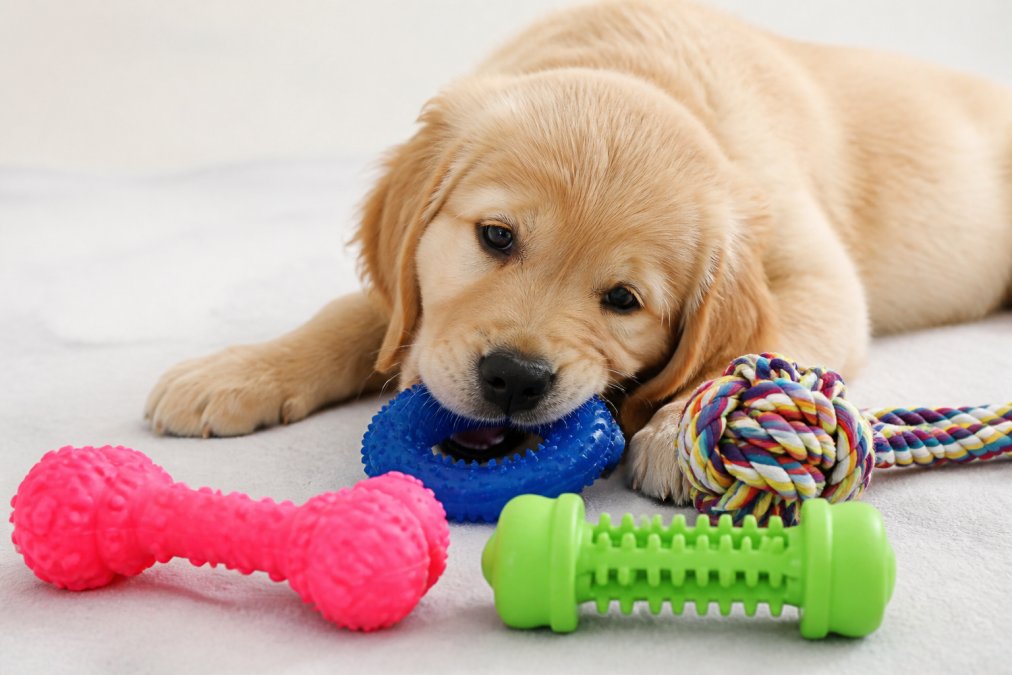
1. Natural Rubber Ring Teethers
Natural rubber ring teethers are simple, affordable, and highly effective for teething relief. These toys feature a smooth outer surface with textured grooves that provide gentle gum massage as puppies chew. The ring shape allows puppies to grip and manipulate the toy easily, making it ideal for interactive play and solo enrichment.
Natural rubber construction ensures the toy remains non-toxic even during extended chewing. The material is durable enough to withstand moderate to aggressive chewing without breaking apart. Many puppies find the slight flexibility of rubber more comfortable on their developing teeth than rigid plastic alternatives. These toys are easy to clean and can be frozen for additional soothing relief during peak teething discomfort.
2. Cotton Rope Chew Toys
Cotton rope toys offer a different texture that appeals to many puppies during teething. The braided design provides multiple surfaces for chewing, and the soft fibers create a gentler experience than harder materials. Rope toys are particularly good for puppies that prefer textured surfaces and interactive play.
Cotton rope construction makes these toys safe for supervised play, though you should monitor your puppy to ensure they don't unravel the rope excessively. The fibers help clean between teeth naturally as the puppy chews. Rope toys are lightweight and portable, making them perfect for travel or multiple play areas throughout your home. Their affordability means you can purchase several for rotation.
3. Nylon Chew Sticks
Nylon chew sticks are engineered specifically for teething puppies and offer excellent durability at budget-friendly prices. These toys provide sustained chewing resistance that satisfies the intense need for jaw pressure relief during the teething phase. The textured surface stimulates gums and helps with tooth eruption without causing harm.
Nylon sticks come in various sizes suitable for different puppy breeds. The material resists splintering better than many alternatives, reducing choking risks. These toys maintain their shape through weeks of use, making them economical for pet owners. However, supervise chewing sessions to ensure your puppy doesn't bite off large pieces. Replace the toy once it becomes significantly worn or develops sharp edges.
4. Frozen Treat Toys
Frozen treat toys combine enrichment with therapeutic cold relief for sore gums. You can fill these rubber toys with water, broth, or plain yogurt, then freeze them for hours of soothing chewing. The cold temperature reduces inflammation and provides numbing relief similar to what human infants experience with frozen teething rings.
These toys work exceptionally well during peak teething discomfort in the afternoon and evening hours. The novelty of different frozen fillings keeps puppies engaged and prevents boredom.
5. Textured Rubber Kong-Style Toys
Textured rubber toys designed in a Kong-style shape offer versatility for teething puppies. These toys feature multiple textures across their surface, providing varied sensations during chewing. The hollow center can be stuffed with treats or frozen fillings for extended engagement and enrichment.
How to Stop Puppy Biting and Nipping
Redirecting biting behavior toward appropriate toys is more effective than punishment during the teething phase. When your puppy nips or bites, immediately redirect them to an approved chew toy. Praise and reward them when they choose the toy over your hands or clothing. This positive reinforcement teaches puppies that chewing toys brings positive attention.
When Do Puppies Stop Teething
Most puppies complete their teething phase by 6 to 7 months of age, when their full set of adult teeth has emerged. However, the intensity of chewing behavior often persists beyond this period as puppies continue to explore their environment through their mouths. The urge to chew gradually decreases as puppies mature, typically becoming less intense by 12 months of age.
Choosing the Right Toy for Your Puppy
Select toys based on your puppy's size, chewing intensity, and individual preferences. Smaller puppies need appropriately sized toys they can manipulate comfortably without risk of swallowing. Larger or more aggressive chewers require durable materials that withstand intense pressure without breaking apart.
| Toy Type | Best For | Durability | Price Range |
|---|---|---|---|
| Natural Rubber Rings | Gentle chewers | Moderate | Budget-friendly |
| Cotton Rope | Interactive play | Lower | Very affordable |
| Nylon Sticks | Aggressive chewers | High | Budget-friendly |
| Frozen Treat Toys | Gum relief | Moderate | Affordable |
| Textured Rubber Kong-Style | Versatile use | High | Budget-friendly |
Cleaning and Maintaining Budget Chew Toys
Regular cleaning extends the life of budget chew toys and prevents bacterial growth. Wash toys weekly with warm soapy water and rinse thoroughly. For toys that have been in your puppy's mouth for extended periods, use a pet-safe disinfectant or run them through the dishwasher on a gentle cycle if they're dishwasher-safe.
Frequently Asked Questions
What are the best budget toys for teething puppies?
The best budget toys for teething puppies combine safety, durability, and comfort. Natural rubber rings, cotton rope toys, nylon chews, frozen treat toys, and textured rubber toys offer excellent value. Look for non-toxic materials, appropriate sizing for your puppy's mouth, and toys that provide gum massage relief. Rotate toys regularly to maintain interest and prevent wear.
What safe materials for puppy chew toys should I prioritize?
Prioritize non-toxic, puppy-safe materials like natural rubber, food-grade nylon, cotton rope, and rubber compounds. Avoid toys with small parts, toxic dyes, or materials that splinter easily. Check that toys are free from BPA, phthalates, and harmful chemicals. Always inspect toys for damage before giving them to your puppy, and supervise play with new toys to ensure safety.
How do I stop puppy biting and nipping during teething?
Redirect nipping to appropriate chew toys by offering them immediately when your puppy bites. Use positive reinforcement to reward gentle play. Frozen toys provide numbing relief that reduces the urge to bite. Engage in interactive play with toys rather than using your hands. Be consistent with boundaries, and never encourage rough play. If biting persists, consult your veterinarian or a certified trainer.
When do puppies stop teething?
Most puppies stop teething between 6 and 7 months of age, though some breeds continue until 8 months. Adult teeth fully emerge by 12 months. During this period, provide appropriate chew toys to support healthy jaw development and manage discomfort. After teething ends, continue offering durable toys for enrichment and dental health, even though the intensity of chewing typically decreases.

